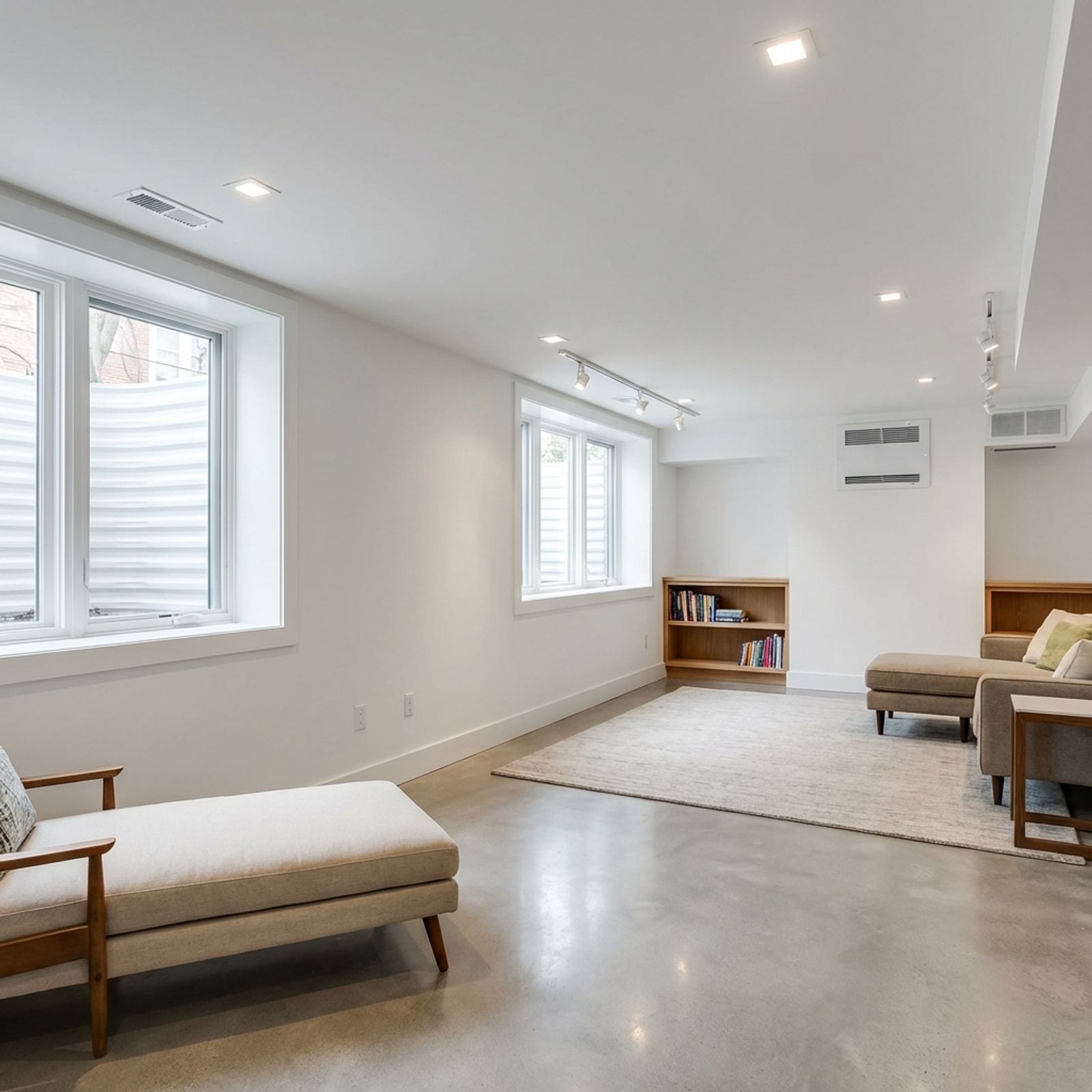
Basements present unique challenges for basement air quality. Located below ground, these spaces naturally accumulate moisture, lack adequate ventilation, and often harbor mold, musty odors, and radon. For homeowners who use basements as living spaces, storage areas, or home offices, poor air quality can affect comfort, health, and the rest of the home.
Unlike above-ground rooms, basements face persistent moisture infiltration through concrete walls and floors. Limited natural ventilation allows stale air to accumulate. Without proper management, basements become reservoirs of poor air quality that migrates upstairs through stairwells and HVAC systems.
This guide explains the specific air quality challenges basements present and provides practical, evidence-based strategies to create healthier basement environments.
What Basement Air Quality Means for Your Home
Basements often have the worst air quality in the home. Concrete foundations allow moisture vapor to enter continuously. Poor drainage around the foundation introduces water. Lack of windows and ventilation prevents air exchange, allowing pollutants to accumulate.
This combination creates ideal conditions for mold growth, musty odors, and elevated humidity. Radon, a radioactive gas that enters through foundation cracks, is more concentrated in basements. VOCs off-gassing from stored items, paints, and building materials linger without adequate air exchange.
Poor basement air does not stay contained. It rises through the stack effect, carrying moisture, mold spores, and odors into living spaces above. Addressing basement air quality protects your entire home.
What Science Says About Basement Air Quality
Research on basement environments consistently identifies moisture as the primary driver of air quality problems. Studies measuring humidity in below-grade spaces find that many basements exceed the 60% relative humidity threshold where mold and dust mites thrive, even in climate-controlled homes.
Radon testing data shows that basement radon levels often exceed EPA action levels, particularly in geographic areas with uranium-bearing rock formations. Without testing, most homeowners remain unaware of radon exposure risks.
Ventilation studies demonstrate that basements typically have air exchange rates far below recommended levels. This stagnation allows pollutants to concentrate. Mechanical ventilation or dehumidification with adequate air movement significantly improves conditions.
Common Myths About Basement Air Quality
Several misconceptions prevent homeowners from effectively managing basement air quality:
- Myth: Musty smell is just a normal basement odor. Reality: Musty odors indicate active mold growth or high moisture. This is a problem requiring intervention, not a normal condition.
- Myth: Air purifiers solve basement air quality problems. Reality: Air purifiers help with particles but do not address moisture, the root cause of most basement issues. Dehumidifiers are more critical.
- Myth: Radon only matters if you have a basement bedroom. Reality: Radon migrates throughout the home. Testing and mitigation protect the entire house, not just basement spaces.
- Myth: Waterproofing paint eliminates moisture. Reality: Paint may hide surface moisture but does not stop vapor transmission through concrete. Proper drainage and dehumidification are necessary.
Practical Steps to Improve Basement Air Quality
Focus on these evidence-based strategies for basement air quality:
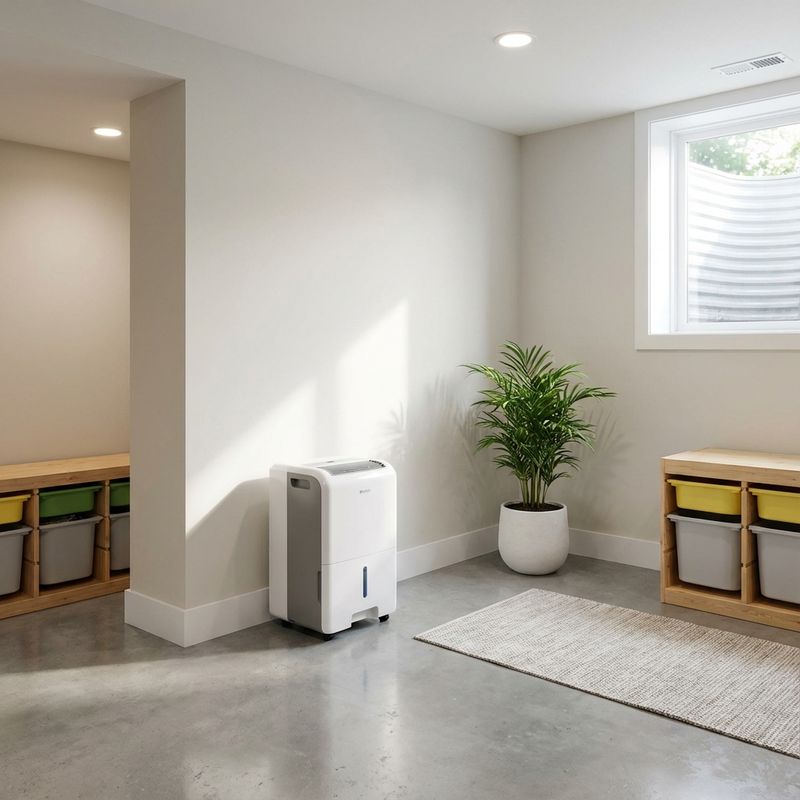
- Install and run a dehumidifier: Choose a unit sized for your square footage. Keep basement humidity between 30-50%. Empty or drain continuously.
- Test for radon: Use a long-term radon test kit (3-12 months) in the lowest occupied level. If levels exceed 4 pCi/L, install radon mitigation.
- Improve drainage: Ensure gutters direct water away from foundation. Grade soil away from the house. Consider exterior foundation waterproofing if moisture persists.
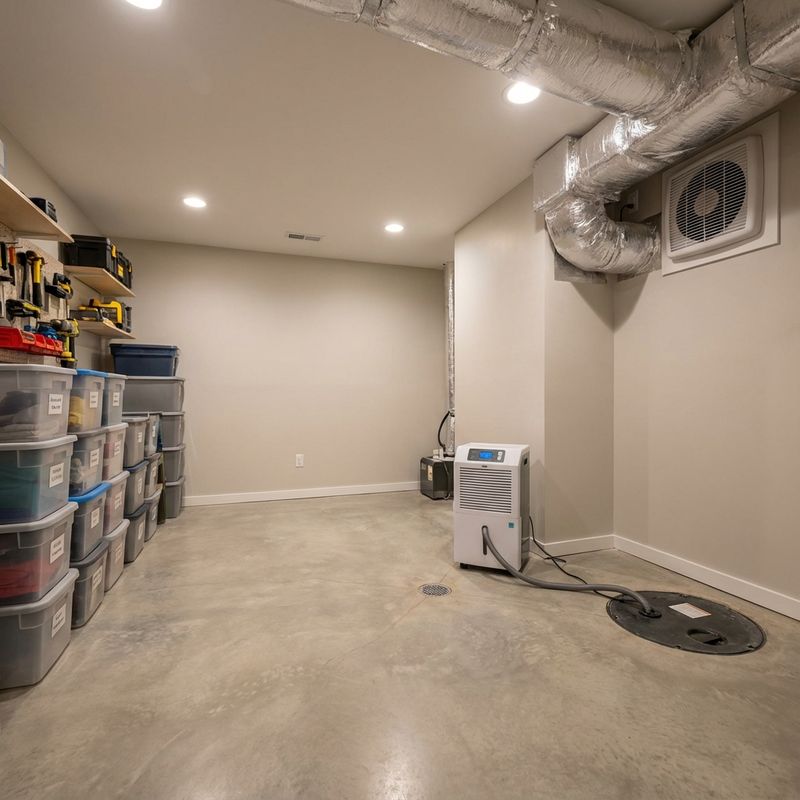
- Add ventilation: If possible, install exhaust fans or consider mechanical ventilation. Even opening basement windows during dry weather helps exchange stale air.
- Seal foundation cracks: Use hydraulic cement or epoxy to seal visible cracks. This reduces radon entry and moisture infiltration.
- Address mold promptly: Clean small areas with soap and water. For large mold problems (>10 sq ft), consult a professional remediation service.
- Reduce pollutant sources: Store paints, solvents, and chemicals in sealed containers. Minimize stored cardboard and fabric that absorb moisture and harbor mold.
When Basement Air Quality Efforts Are Not Enough
Sometimes standard basement air quality improvements fall short:
- Persistent moisture or flooding despite dehumidifiers indicates foundation drainage problems. This requires professional assessment of exterior grading, French drains, or sump pumps.
- Visible mold returning after cleaning suggests ongoing moisture sources or hidden mold behind walls. Professional mold inspection and remediation may be necessary.
- Radon levels above 4 pCi/L require professional radon mitigation systems. DIY approaches are not reliable for elevated radon.
If basic interventions do not resolve basement air quality problems, consult professionals specializing in waterproofing, mold remediation, or radon mitigation as appropriate.
Basement Air Quality Improvement Checklist
Use this checklist to systematically improve basement air quality:
- Test for radon with long-term test kit (3-12 months)
- Install appropriately sized dehumidifier and maintain 30-50% humidity
- Check and clean dehumidifier filter monthly
- Inspect foundation for cracks and seal as needed
- Verify gutters and downspouts direct water away from foundation
- Grade soil to slope away from house (6 inches drop over 10 feet)
- Add ventilation: exhaust fans, windows, or mechanical ventilation
- Remove or seal stored chemicals, paints, and solvents
- Store items on shelves, not directly on floor, to allow air circulation
- Clean visible mold with soap and water (or hire professional for large areas)
- Consider HEPA air purifier as supplement to dehumidifier, not replacement
Key Takeaways
- Basement air quality problems stem primarily from moisture, which creates conditions for mold, musty odors, and structural damage.
- Dehumidification is more critical than air purification for basements—control moisture first, then address other pollutants.
- Radon testing is essential for all basements. Elevated radon requires professional mitigation, not DIY solutions.
- Poor basement air quality affects the entire home through the stack effect. Improving basement air protects upper floors.
Frequently Asked Questions
Do I need a dehumidifier or air purifier for my basement?
Dehumidifier first. Most basement air quality problems stem from excess moisture. Once humidity is controlled (30-50%), add an air purifier if needed for particles. A dehumidifier addresses the root cause.
How do I get rid of a musty basement smell?
Musty smell indicates mold or high moisture. Run a dehumidifier to keep humidity below 50%. Clean visible mold with soap and water. Fix water infiltration sources. The smell will disappear when moisture is controlled.
Is radon really that dangerous in basements?
Yes. Radon is the second leading cause of lung cancer after smoking. Basements often have elevated levels. Testing is the only way to know. If levels exceed 4 pCi/L, professional mitigation is recommended.
Can I use basement air to improve air quality upstairs?
No. Poor basement air migrates upstairs naturally via the stack effect, degrading whole-home air. Improve basement air quality first, then ensure proper ventilation prevents contaminated air from rising.
Will finishing my basement improve air quality?
Not automatically. Finishing can worsen air quality if moisture problems are not addressed first. Always control moisture, test radon, and ensure ventilation before finishing. Otherwise, you will trap pollutants behind walls.
Want to improve your home's air quality?
Take our comprehensive air quality quiz to get personalized recommendations.
Take the Quiz