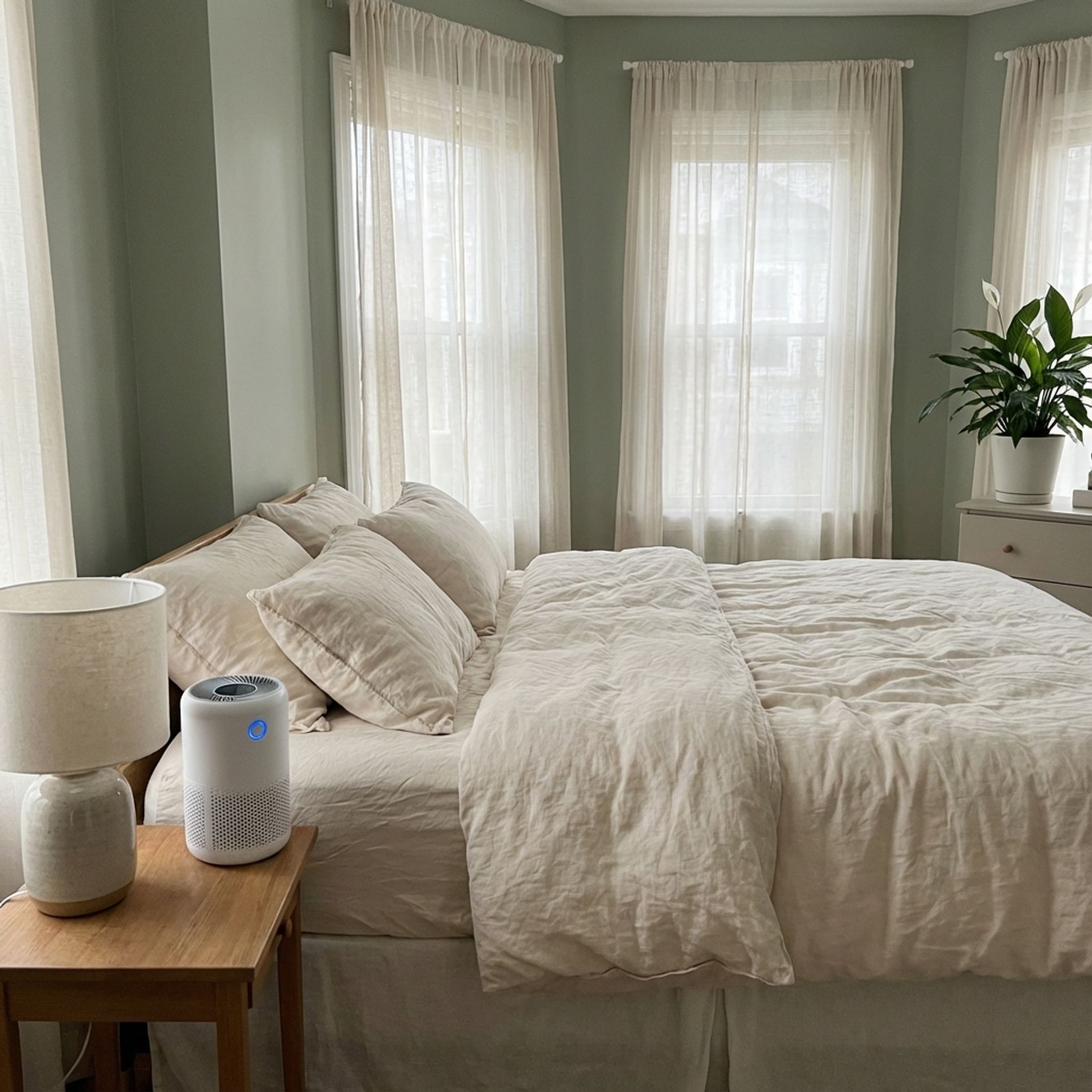
Bedroom air quality directly affects sleep quality, comfort, and long-term health. You spend approximately one-third of your life in your bedroom—more time than any other single room. Poor bedroom air quality disrupts sleep, triggers allergies, and exposes you to pollutants during your most vulnerable hours.
During sleep, breathing rate slows but remains constant for hours. CO2 accumulates in poorly ventilated bedrooms. Dust mites thrive in mattresses and bedding. VOCs from mattresses, furniture, and textiles off-gas continuously. Allergens settle on surfaces and become airborne with movement. These factors combine to create an environment that can undermine rest and health.
This guide explains how bedroom air quality impacts sleep and health, and provides practical, evidence-based strategies to create a cleaner, healthier sleep environment.
What Bedroom Air Quality Means for Your Home
Poor bedroom air quality affects you differently than other rooms because of prolonged, continuous exposure during sleep. You cannot leave or take breaks. Eight hours of breathing elevated CO2, allergens, or VOCs compounds exposure beyond what brief time in other spaces would cause.
Sleep disruption from poor air quality creates cascading health effects. Studies link bedroom allergens to nighttime asthma symptoms, morning congestion, and fragmented sleep. Elevated CO2 concentrations—common in bedrooms with closed doors and windows—impair sleep quality and cause morning headaches and grogginess.
Mattresses, pillows, and bedding harbor dust mites, which feed on dead skin cells and thrive in the warm, humid microclimate of beds. For people with allergies, this constant exposure during sleep triggers symptoms that medications cannot fully control.
What Science Says About Bedroom Air Quality and Sleep
Research on bedroom environments consistently identifies CO2 accumulation as a major sleep quality issue. Studies measuring overnight CO2 levels in bedrooms with closed doors find concentrations often exceed 1,000 ppm—levels associated with impaired cognitive function and sleep disruption. Proper ventilation keeps levels below this threshold.
Allergen intervention studies show that reducing bedroom dust mites through encasements, hot-water washing, and HEPA filtration significantly improves sleep quality and reduces nighttime asthma symptoms in sensitized individuals.
VOC measurements in bedrooms reveal that new mattresses and furniture can off-gas formaldehyde, toluene, and other compounds for months. Airing out new bedroom items before use and choosing low-VOC certified products reduces exposure during the vulnerable sleep period.
Common Myths About Bedroom Air Quality
Several misconceptions prevent homeowners from effectively managing bedroom air quality:
- Myth: Bedrooms need to be warm and sealed for comfort. Reality: Slightly cooler temperatures (60-67°F) and fresh air exchange improve sleep quality. Stuffiness harms sleep more than mild coolness.
- Myth: Dust mite covers make beds uncomfortable. Reality: Modern allergen-proof encasements are breathable and unnoticeable under sheets. They provide the single most effective dust mite control.
- Myth: Air purifiers are too noisy for bedrooms. Reality: Quality HEPA purifiers on low settings produce white noise that many find soothing. Noise levels are typically 25-40 dB—quieter than a refrigerator.
- Myth: Plants improve bedroom air quality significantly. Reality: Plants contribute minimally to air cleaning. They can increase humidity and harbor mold in soil. HEPA filtration is far more effective.
Practical Steps to Improve Bedroom Air Quality
Focus on these evidence-based strategies for better bedroom air quality:
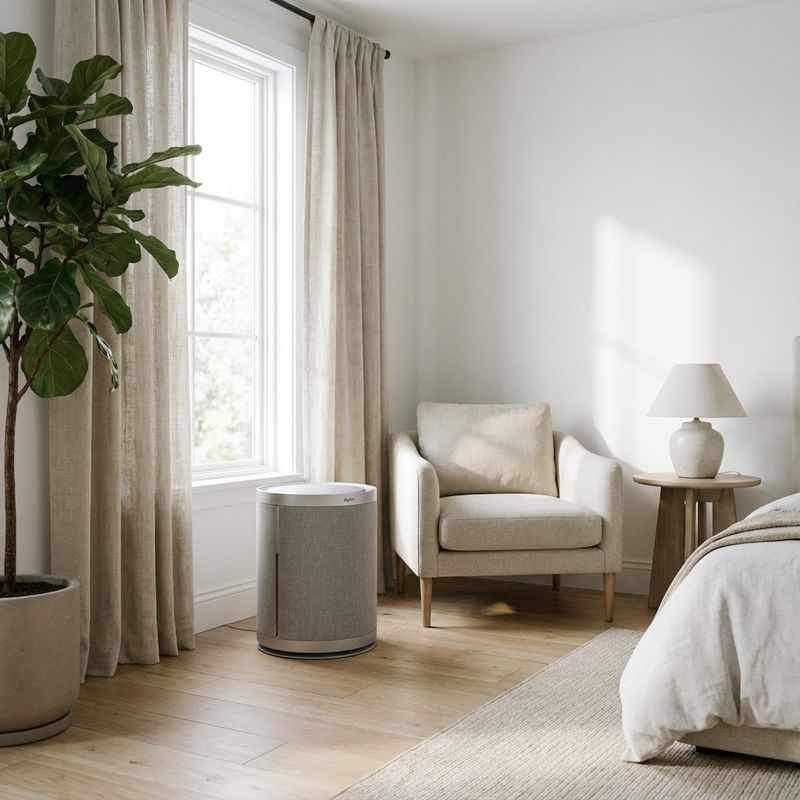
- Install a bedroom-sized HEPA air purifier: Run continuously on low setting. This provides constant particle removal without disturbing sleep. Position away from head of bed to avoid direct airflow.
- Use dust mite-proof encasements: Cover mattress, box spring, and pillows with allergen-proof covers. Wash weekly in hot water (130°F+).
- Improve ventilation: Crack a window or door during sleep if outdoor air quality permits. This prevents CO2 buildup and provides fresh air exchange. Use a fan to facilitate airflow if needed.

- Wash bedding weekly in hot water: High temperatures (130°F+) kill dust mites. Use fragrance-free detergents to avoid adding VOCs to fabrics you sleep in.
- Choose low-VOC mattresses and furniture: Look for CertiPUR-US foam, organic materials, or GREENGUARD Gold certification. Air out new items before bringing into bedroom.
- Minimize bedroom clutter: Reduce dust-collecting surfaces, books, papers, and decorative items. Less clutter means less dust accumulation and easier cleaning.
- Vacuum with HEPA filter weekly: Clean floors, rugs, and under bed. HEPA vacuums prevent particles from re-entering air during cleaning.
- Keep humidity 30-50%: Use hygrometer to monitor. Add humidifier in winter if too dry; use dehumidifier if too humid. Proper humidity controls dust mites and mold.
When Bedroom Air Quality Efforts Are Not Enough
Sometimes standard bedroom air quality improvements fall short:
- Persistent morning congestion, headaches, or fatigue despite interventions may indicate hidden mold, chemical sensitivities, or allergen sources requiring professional assessment.
- Allergy or asthma symptoms that worsen at night despite dust mite controls suggest additional sensitivities. Allergy testing can identify specific triggers for targeted treatment.
- Sleep quality that does not improve with air quality interventions may have non-air-quality causes—sleep apnea, stress, or other medical conditions requiring different approaches.
If basic bedroom air quality improvements do not resolve sleep or respiratory issues, consult allergists, sleep specialists, or indoor air quality professionals for comprehensive evaluation.
Bedroom Air Quality Improvement Checklist
Use this checklist to systematically improve bedroom air quality:
- Install appropriately sized HEPA air purifier, run continuously on low
- Cover mattress, box spring, and pillows with allergen-proof encasements
- Wash all bedding weekly in hot water (130°F+)
- Use fragrance-free, unscented laundry detergent for bedding
- Crack window or door during sleep for CO2 control (weather permitting)
- Vacuum bedroom with HEPA vacuum weekly, including under bed
- Keep bedroom humidity between 30-50% (use hygrometer)
- Minimize clutter, books, papers, and decorative items
- Choose low-VOC or certified organic mattresses and bedding
- Air out new mattresses and furniture before bringing into bedroom
- Avoid plug-in air fresheners, candles, and fragranced products
- Keep bedroom temperature cool (60-67°F) for better sleep
Key Takeaways
- Bedroom air quality has outsized health impacts because of prolonged nightly exposure—you spend one-third of your life breathing bedroom air while sleeping.
- CO2 accumulation in closed bedrooms impairs sleep quality. Ventilation—via cracked windows or doors—prevents buildup and improves rest.
- Dust mite-proof encasements and weekly hot-water washing provide the most effective allergen control for people with sensitivities.
- HEPA air purifiers running continuously on low settings reduce particles without noise disruption and improve air quality measurably.
Frequently Asked Questions
Do I need an air purifier in my bedroom?
Highly beneficial for everyone, essential for people with allergies or asthma. Bedrooms are where you spend the most continuous time. HEPA purifiers on low settings provide constant particle removal without disturbing sleep.
Should I sleep with my bedroom door open or closed?
Open or cracked is better for air quality. Closed doors trap CO2 and reduce ventilation. If using HVAC, closing doors can reduce airflow. For CO2 control, leave door or window slightly open.
How often should I wash my bedding for air quality?
Weekly in hot water (130°F+). This kills dust mites and removes accumulated allergens and skin cells. Use fragrance-free detergent. Dust mite-proof encasements reduce how often you need to wash the mattress itself.
Can bedroom air quality affect sleep?
Yes, significantly. Poor air quality causes sleep disruption through allergen exposure, CO2 accumulation, and VOC irritation. Studies show improved ventilation and allergen control lead to measurably better sleep quality.
Are memory foam mattresses bad for air quality?
Some off-gas VOCs initially. Look for CertiPUR-US certified foam, which limits harmful chemical content. Air out new mattresses for several days before use. After off-gassing period ends, properly certified foam is fine.
Want to improve your home's air quality?
Take our comprehensive air quality quiz to get personalized recommendations.
Take the Quiz