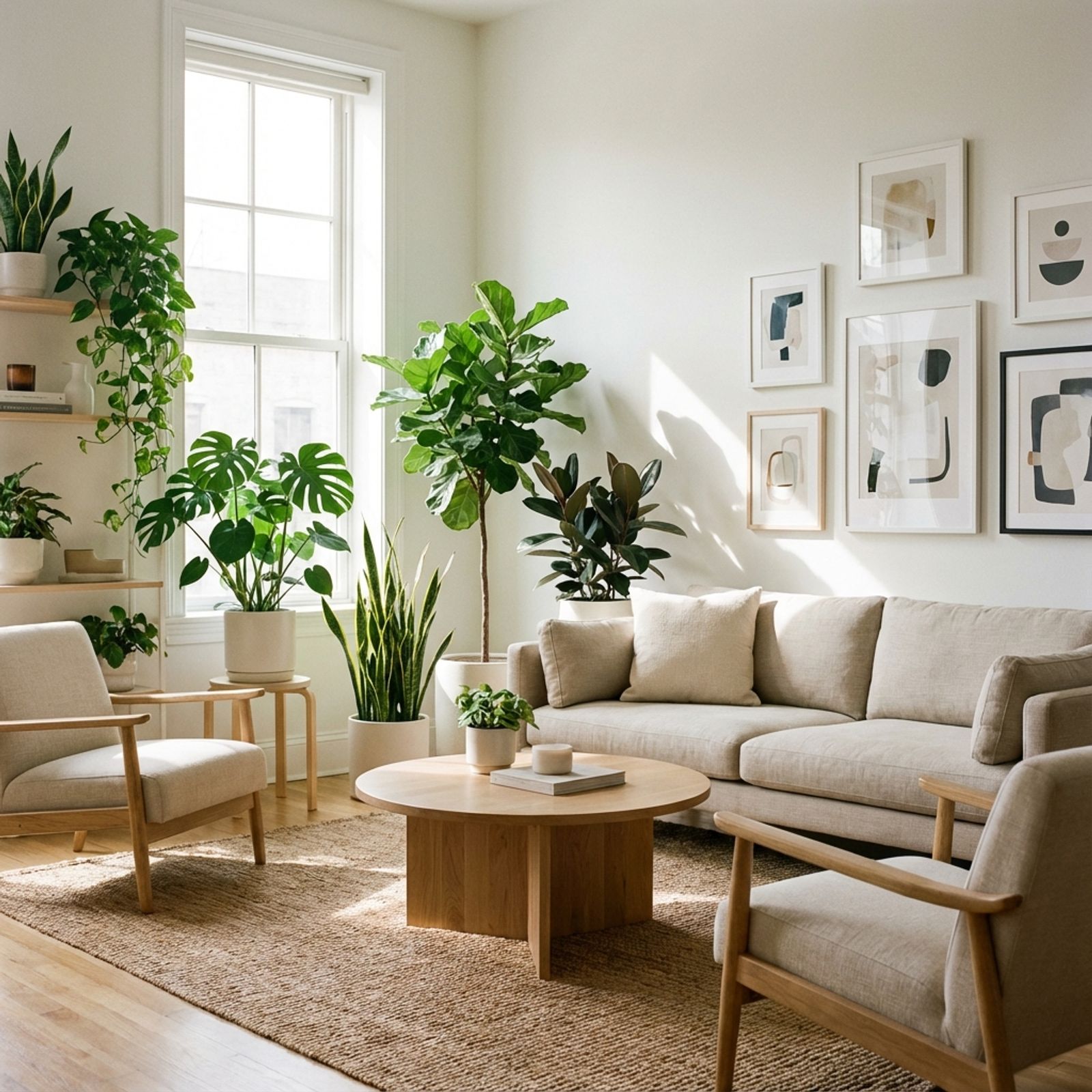
The question comes up often: can a few houseplants really clean the air in your home? It is an appealing idea—natural, low-cost, and easy to maintain. Many homeowners hope that adding greenery will reduce indoor pollutants and create a healthier living environment.
Houseplants do offer benefits, but their ability to meaningfully improve indoor air quality in real homes is often overstated. Understanding what plants can and cannot do helps you make informed decisions about your indoor environment.
This article examines the science behind houseplants and air purification, separates fact from fiction, and explains more reliable ways to improve the air you breathe at home.
What This Means for Your Home
While houseplants are lovely additions to any home, expecting them to function as air purifiers can lead to disappointment. In typical living spaces, plants process air too slowly to keep up with everyday sources of indoor pollution like cooking, cleaning products, off-gassing from furniture, and outdoor air that enters through windows and doors.
The benefits houseplants do provide—like adding humidity, improving mood, and enhancing visual comfort—are real and worthwhile. But if your goal is to reduce allergens, remove volatile organic compounds (VOCs), or lower particulate matter, other strategies will deliver far better results.
What Science Says About Houseplants and Air Quality
The idea that houseplants help clean the air became popular after a well-known NASA study in the 1980s. Researchers found that certain plants could remove pollutants in sealed chambers over 24 hours. This was promising research for spacecraft environments, but it does not translate directly to homes.
Real homes are not sealed chambers. Air moves constantly through leaks, open doors, windows, and ventilation systems. Pollutants are introduced continuously through cooking, cleaning, pets, and people. In this context, plants simply cannot process enough air to make a noticeable difference.
Studies that tested plants in realistic indoor conditions found you would need dozens—sometimes hundreds—of plants per room to achieve meaningful air purification. For most households, this is impractical.
Common Myths About Houseplants and Clean Air
Several misconceptions persist about what houseplants can do:
- Myth: A few plants can replace an air purifier. Reality: Plants work far too slowly to match even a basic HEPA filter.
- Myth: Certain plants are "superstar" air cleaners. Reality: All plants have minimal impact in real-world conditions, regardless of species.
- Myth: Plants significantly reduce dust and allergens. Reality: Plants can actually collect dust and may contribute to mold growth if overwatered.
- Myth: More plants always mean better air. Reality: Too many plants can increase indoor humidity excessively, encouraging mold and dust mites.
Practical Benefits Houseplants Do Provide
While houseplants are not effective air purifiers, they do offer real benefits:
- Moderate humidity increase: Plants release moisture, which can help in very dry environments (but monitor levels to avoid excess).
- Psychological comfort: Greenery can reduce stress, improve mood, and create a sense of calm.
- Visual cleanliness: A well-kept space with plants often feels fresher and more inviting.
- Connection to nature: Caring for plants can be rewarding and enhance your living space aesthetically.
These benefits are valuable, but they are distinct from air purification.
When Houseplants Are Not Enough
Houseplants do not meaningfully address common indoor air pollutants:
- Particulate matter (PM2.5 and PM10) from cooking, candles, or outdoor sources
- Volatile organic compounds (VOCs) from cleaning products, furniture, or paint
- Allergens like pollen, pet dander, and dust mites
- Combustion byproducts from gas stoves or heating systems
If you are dealing with any of these concerns, relying on plants alone will not provide relief.
Better Ways to Improve Indoor Air Quality
For meaningful improvements to your home air quality, focus on these proven strategies:
- Ventilation: Open windows regularly (weather permitting) to exchange stale indoor air with fresh outdoor air.
- HVAC filtration: Use quality air filters (MERV 11–13) and change them regularly.
- Portable air purifiers: HEPA filters effectively remove airborne particles.
- Source control: Use range hoods when cooking, choose low-VOC products, and minimize indoor pollutant sources.
- Humidity management: Keep indoor humidity between 30–50% to discourage mold and dust mites.
- Regular cleaning: Vacuum with a HEPA filter and damp-dust surfaces to reduce settled particles.
Key Takeaways
- Houseplants offer real benefits like humidity balance and psychological comfort, but they do not meaningfully purify air in typical homes.
- Lab studies on plant air purification do not reflect real-world conditions where air moves freely and pollutants are introduced continuously.
- For noticeable improvements in indoor air quality, prioritize ventilation, filtration, and source control over adding plants.
- Enjoy houseplants for what they truly offer—visual appeal, mood enhancement, and a touch of nature—without expecting them to clean your air.
Frequently Asked Questions
How many houseplants do I need to purify my air?
Based on real-world testing, you would likely need dozens to hundreds of plants per room to achieve meaningful air purification. For most homes, this is impractical. Mechanical filtration and ventilation are far more effective.
Are certain houseplants better for air quality than others?
While some species process pollutants slightly faster in lab settings, the difference is negligible in actual homes. All common houseplants have minimal impact on indoor air quality compared to proper ventilation and filtration.
Can houseplants remove VOCs from my home?
Plants can process trace amounts of VOCs in controlled conditions, but in real homes with continuous pollutant sources and air exchange, their impact is too small to notice. Source control and ventilation are much more effective.
Do houseplants help with allergies and asthma?
Houseplants do not significantly reduce airborne allergens. In fact, they can collect dust on their leaves and may contribute to mold growth if overwatered, potentially worsening allergy symptoms. HEPA filtration and regular cleaning are better solutions.
Should I get rid of my houseplants?
Not at all! Houseplants offer real benefits like improving mood, adding humidity in dry environments, and enhancing your space aesthetically. Just do not rely on them as your primary strategy for cleaner air.
Want to improve your home's air quality?
Take our comprehensive air quality quiz to get personalized recommendations.
Take the Quiz