
Entryway air quality matters more than most homeowners realize. Your entryway is where outdoor pollutants—pollen, smoke, dust, pesticides, and vehicle emissions—first enter your home. Everything tracked on shoes, coats, and bags concentrates in this transition zone before spreading throughout living spaces.
Studies measuring pollutant levels show that entryways accumulate higher concentrations of outdoor contaminants than any other room. Seasonal changes amplify the problem: pollen in spring, wildfire smoke in summer, leaf mold in fall, and road salt with de-icing chemicals in winter. Without proper management, these pollutants migrate from shoes and outerwear into carpets, furniture, and air handling systems.
This guide explains how entryways affect whole-home air quality and provides practical strategies to reduce what gets tracked indoors, protecting your family from outdoor pollutants year-round.
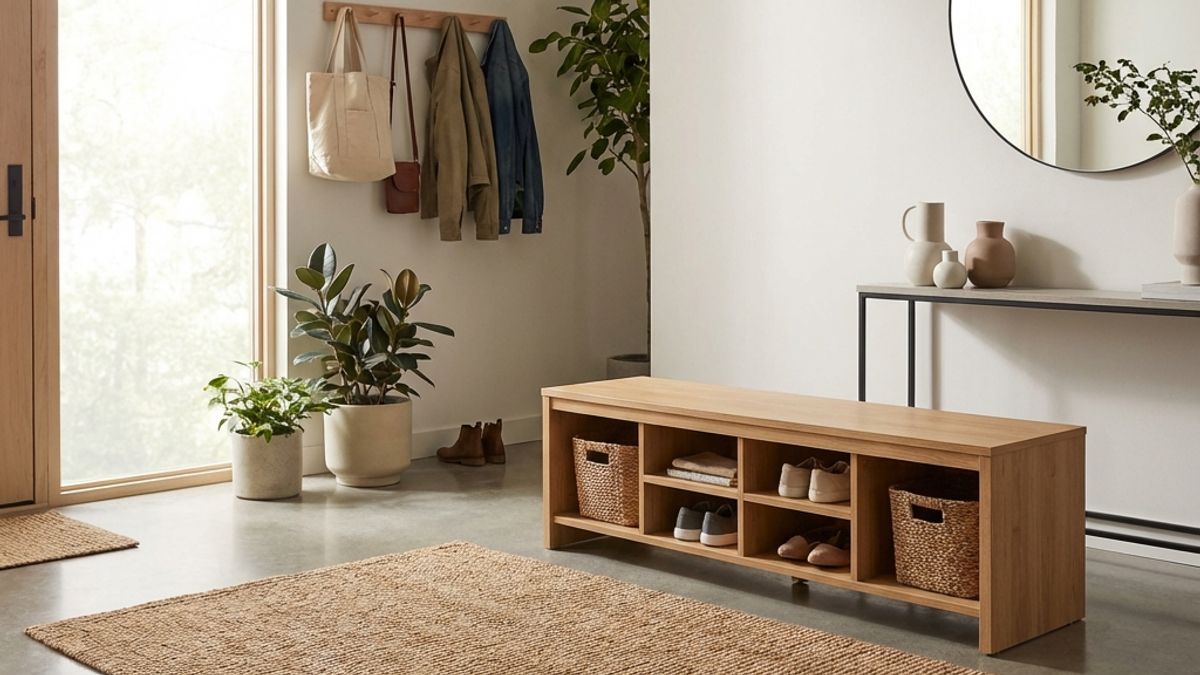
What Entryway Air Quality Means for Your Home
Poor entryway air quality creates a continuous pollution pathway into your home. Shoes track in more than visible dirt—they carry pesticides from lawns, PAHs from asphalt, heavy metals from roadways, pollen grains, and microplastics. EPA studies find that shoes are the primary vector for bringing outdoor contaminants indoors.
Seasonal pollutants concentrate in entryways during peak exposure times. Spring pollen counts spike, affecting everyone who walks through the door. Summer wildfire smoke particles cling to clothing and hair. Fall leaf mold spores accumulate on shoes and bags. Winter road salt and de-icing chemicals track inside, introducing chlorides and chemical residues.
Moisture from rain, snow, and wet shoes creates humid conditions that promote mold growth in entryway closets and on stored outerwear. Combined with tracked-in organic matter, entryways become concentrated sources of both chemical and biological pollutants.
What Science Says About Entryway Air Quality
Research on indoor pollutant pathways consistently identifies shoes as major contributors to indoor contamination. Studies analyzing shoe bottoms find pesticide residues, PAHs (polycyclic aromatic hydrocarbons), lead, and fecal bacteria. Simply wearing shoes indoors transfers these contaminants to floors, where they become airborne with foot traffic and vacuuming.
Pollen tracking studies show that outdoor allergens are brought indoors primarily on clothing, shoes, and pet fur during high pollen seasons. Removing shoes and changing clothes after outdoor exposure significantly reduces indoor allergen levels.
Walkoff mat effectiveness research demonstrates that proper entry matting systems (both outside and inside) can remove 80% of tracked-in dirt and pollutants if adequately sized and maintained. Most households use mats that are too small or go uncleaned, reducing effectiveness.
Common Myths About Entryway Air Quality
Several misconceptions prevent homeowners from effectively managing entryway air quality:
- Myth: A small door mat is sufficient. Reality: Effective matting requires 8-12 feet of combined outdoor/indoor mat coverage to capture most tracked pollutants. Small mats provide minimal benefit.
- Myth: Wiping shoes removes contaminants. Reality: Wiping reduces visible dirt but does not remove chemical residues, pesticides, or microscopic particles. Removing shoes is far more effective.
- Myth: Outdoor pollutants stay in the entryway. Reality: Tracked-in contaminants migrate throughout the home via foot traffic, pets, and air circulation. Entryway management protects the whole house.
- Myth: Entryway air quality only matters during allergy season. Reality: Year-round pollutants vary but are always present—pesticides, road dust, smoke, mold, chemicals. Seasonal strategies should adapt, not disappear.
Practical Steps to Improve Entryway Air Quality
Focus on these evidence-based strategies for better entryway air quality:
- Implement a no-shoes policy: Remove shoes at the door and store in designated area. This single practice eliminates the primary pathway for tracked pollutants. Provide indoor slippers or house shoes for guests.
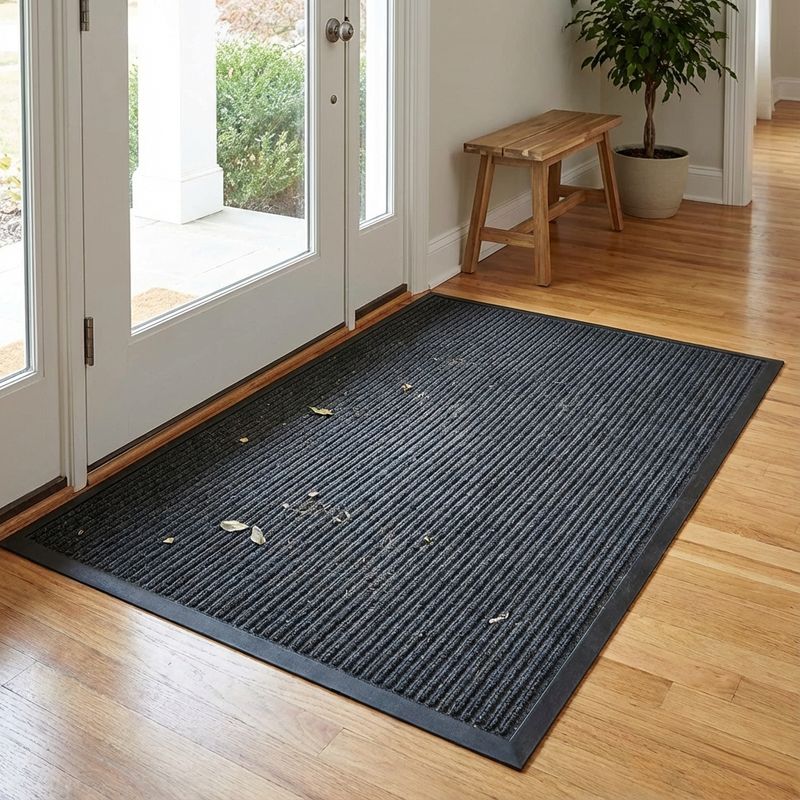
- Use adequate matting: Place outdoor mat (4-6 feet) and indoor mat (4-6 feet) at every entry. Choose mats with aggressive textures to capture particles. Vacuum or shake out mats weekly.
- Create a drop zone: Designate area for shoes, coats, bags immediately inside door. Use closed storage when possible to contain residual dust and odors.
- Manage moisture: Use boot trays or mats with drainage during wet seasons. Ensure proper ventilation in mudrooms to dry wet items and prevent mold. Consider small dehumidifier for poorly ventilated spaces.
- Vacuum entry floors frequently: Use HEPA vacuum on entryway floors 2-3 times per week during high-pollen or high-traffic seasons. This removes tracked pollutants before they spread.
- Consider seasonal strategies: During peak pollen, keep windows near entry closed, encourage coat/shoe changes before entering living spaces. During wildfire smoke events, wipe down outerwear before bringing fully inside.
- Clean hard surfaces weekly: Mop or wet-clean entryway hard floors weekly to capture settled particles that dry vacuuming misses.
When Entryway Air Quality Efforts Are Not Enough
Sometimes standard entryway air quality improvements fall short:
- Persistent indoor allergy symptoms despite outdoor pollen management may indicate additional allergen sources—dust mites, pets, mold—requiring whole-home interventions beyond entryway control.
- Musty odors or visible mold in mudrooms indicate moisture problems beyond what mats can manage. Check for plumbing leaks, poor drainage, or inadequate ventilation requiring professional assessment.
- Heavy tracked-in contamination from specific occupational exposures—construction, agriculture, industrial work—may require dedicated decontamination protocols, separate storage, and professional cleaning beyond standard practices.
If basic entryway improvements do not reduce indoor pollutant levels or symptoms, consult indoor air quality professionals for comprehensive whole-home assessment and targeted interventions.
Entryway Air Quality Improvement Checklist
Use this checklist to systematically improve entryway air quality:
- Implement and enforce no-shoes policy for household and guests
- Provide indoor slippers or house shoes as alternatives
- Install outdoor mat (4-6 feet) at every exterior door
- Install indoor mat (4-6 feet) at every interior entry
- Vacuum or shake out entry mats weekly
- Create designated drop zone for shoes, coats, bags near door
- Use closed shoe storage to contain residual dust and odors
- Install boot trays or mats with drainage for wet seasons
- Ensure adequate ventilation in mudroom/entryway
- Vacuum entryway floors with HEPA vacuum 2-3x per week
- Mop hard entryway floors weekly to capture settled particles
- During peak pollen, keep entry windows closed
- During wildfire smoke, wipe down outerwear before bringing inside
Key Takeaways
- Entryways are the primary pathway for outdoor pollutants—pollen, pesticides, PAHs, heavy metals, smoke—to enter homes via shoes, clothing, and bags.
- No-shoes policies provide the single most effective reduction in tracked pollutants, eliminating the primary contamination vector.
- Adequate matting requires 8-12 feet of combined outdoor/indoor coverage to capture most tracked contaminants. Small mats provide minimal benefit.
- Seasonal pollutant variations require adaptive strategies—pollen management in spring, smoke control in summer, moisture management in winter.
Frequently Asked Questions
Should I really implement a no-shoes policy in my home?
Yes, if you want to significantly reduce tracked pollutants. Shoes carry pesticides, PAHs, lead, bacteria, and allergens. Removing shoes at the door eliminates this primary pathway. Provide alternative indoor footwear for comfort.
How big should my entry mat be?
Combine outdoor and indoor mats totaling 8-12 feet of coverage (4-6 feet each). Most households use mats that are too small—2-3 feet total—providing minimal pollutant capture. Size matters significantly for effectiveness.
Does wiping shoes on a mat clean them enough?
No. Wiping removes visible dirt but not chemical residues, pesticides, or microscopic particles. Research shows shoe wiping is far less effective than complete removal. No-shoes policies provide substantially better pollutant reduction.
How does entryway air quality affect the rest of my home?
Tracked pollutants migrate throughout homes via foot traffic, pets, and air circulation. Entryway contaminants do not stay localized. Effective entryway management protects whole-home air quality, not just the entry area.
Do I need different entryway strategies for different seasons?
Yes. Adapt to seasonal pollutants: spring pollen requires extra coat/shoe management, summer wildfire smoke needs outerwear wiping, winter wet weather needs moisture control with boot trays and ventilation. Core practices stay constant.
Want to improve your home's air quality?
Take our comprehensive air quality quiz to get personalized recommendations.
Take the Quiz