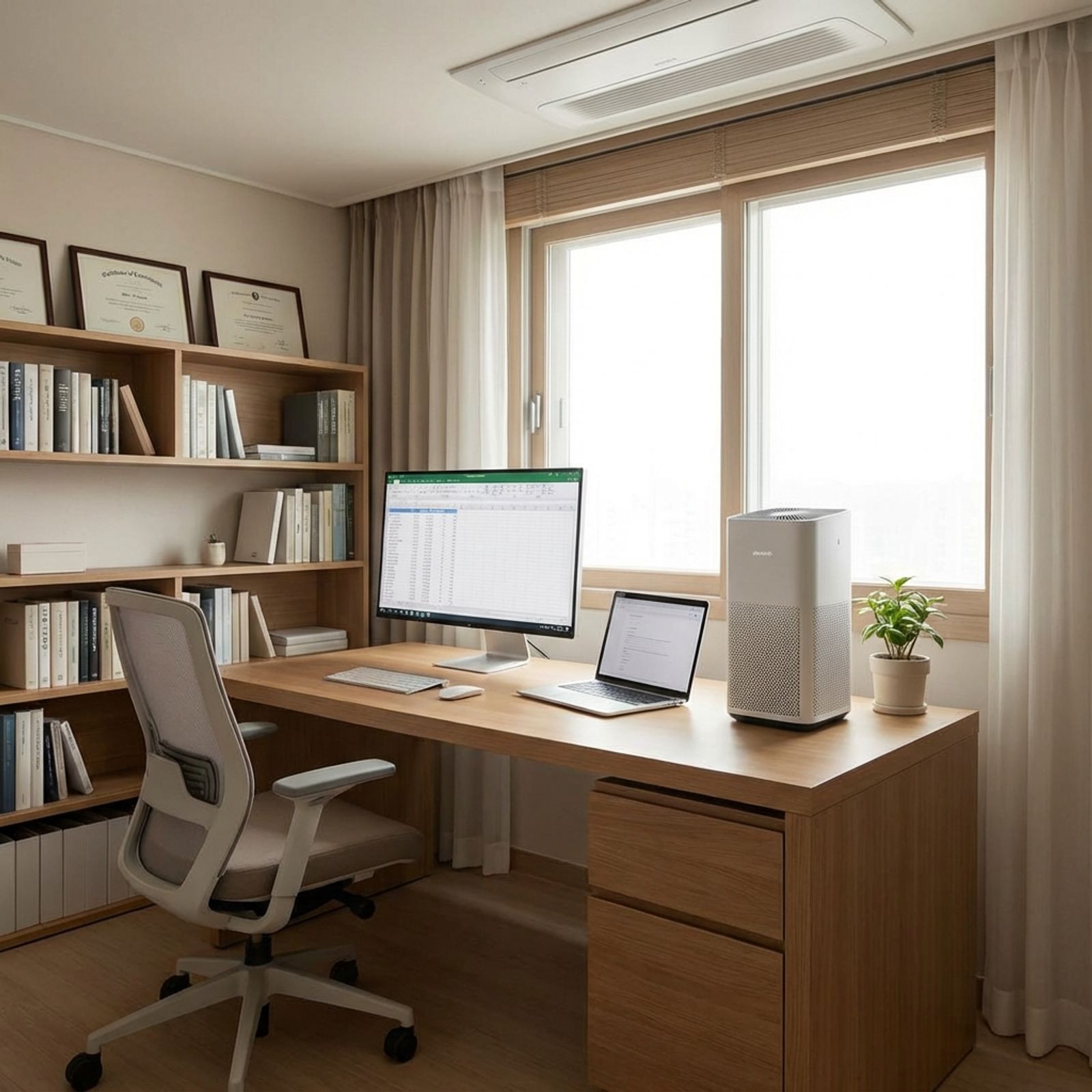
Home office air quality directly impacts focus, productivity, and comfort during remote work. With many professionals now working from home full-time or hybrid schedules, home offices have become primary workspaces where people spend 8+ hours daily. Poor air quality in these spaces causes fatigue, headaches, difficulty concentrating, and long-term health effects.
Home offices face unique air quality challenges. Closed doors prevent air circulation. Computers and electronics generate heat, reducing perceived air freshness. Limited windows mean inadequate ventilation. CO2 levels rise during extended work sessions in small rooms. Dust accumulates on desks, keyboards, and equipment. Without active management, office air quality degrades throughout the workday, undermining the very productivity remote work promises.
This guide explains how home office air quality affects work performance and health, and provides practical strategies to create a workspace environment that supports focus and wellbeing.
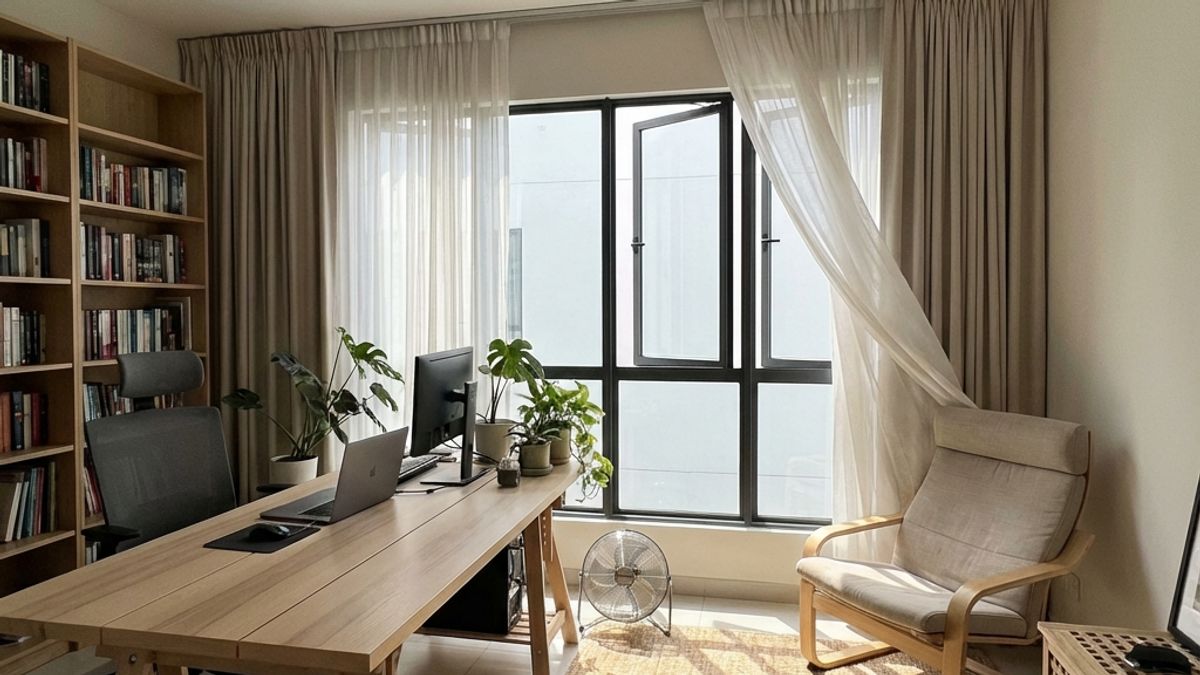
What Home Office Air Quality Means for Your Productivity
Poor home office air quality creates cognitive drag that undermines work performance. Studies show that elevated CO2 concentrations—common in closed offices—impair decision-making, reduce concentration, and slow cognitive processing. Most people working in home offices with closed doors experience CO2 levels above 1,000 ppm by midday, well into the range where performance degrades.
Stale air creates subjective discomfort that distracts from work. The stuffiness and warmth from electronics and closed spaces make it harder to maintain focus. Afternoon fatigue in home offices often stems from poor ventilation rather than the work itself.
Allergens and dust in home offices trigger symptoms that disrupt workflow. Sneezing, congestion, and eye irritation from desk dust and poor air filtration create constant interruptions. For those with asthma or allergies, inadequate office air quality can make remote work physically uncomfortable.
What Science Says About Office Air Quality at Home
Research on indoor CO2 and cognitive function consistently shows performance impairment at levels routinely reached in home offices. Studies using controlled CO2 exposures find measurable declines in strategic thinking, decision-making speed, and information processing at 1,000-2,500 ppm—concentrations typical of small, closed rooms with one person working for several hours.
Ventilation intervention studies demonstrate that increasing fresh air exchange in offices improves reported alertness, reduces fatigue, and boosts measured productivity. Even modest ventilation improvements—opening windows or using mechanical ventilation—show benefits.
Particle and VOC measurements in home offices reveal elevated levels from electronic equipment, furniture off-gassing, and inadequate cleaning. HEPA air purifiers reduce these concentrations effectively, particularly in smaller office spaces where localized filtration has maximum impact.
Common Myths About Home Office Air Quality
Several misconceptions prevent remote workers from optimizing office air quality:
- Myth: Afternoon fatigue is just normal work tiredness. Reality: Much "work fatigue" in home offices stems from elevated CO2 and poor ventilation. Opening windows or taking outdoor breaks often restores alertness immediately.
- Myth: Closing the office door improves focus by blocking noise. Reality: While it reduces distractions, closed doors trap CO2 and reduce air exchange. Balance privacy needs with periodic door opening or active ventilation.
- Myth: Air purifiers are too noisy for focused work. Reality: Quality HEPA purifiers on low settings produce minimal noise (25-35 dB)—quieter than HVAC systems and often perceived as pleasant white noise.
- Myth: Plants significantly improve office air quality. Reality: Plants provide negligible air cleaning compared to ventilation or HEPA filtration. They add aesthetic value but not meaningful pollutant reduction.
Practical Steps to Improve Home Office Air Quality
Focus on these evidence-based strategies for better home office air quality:
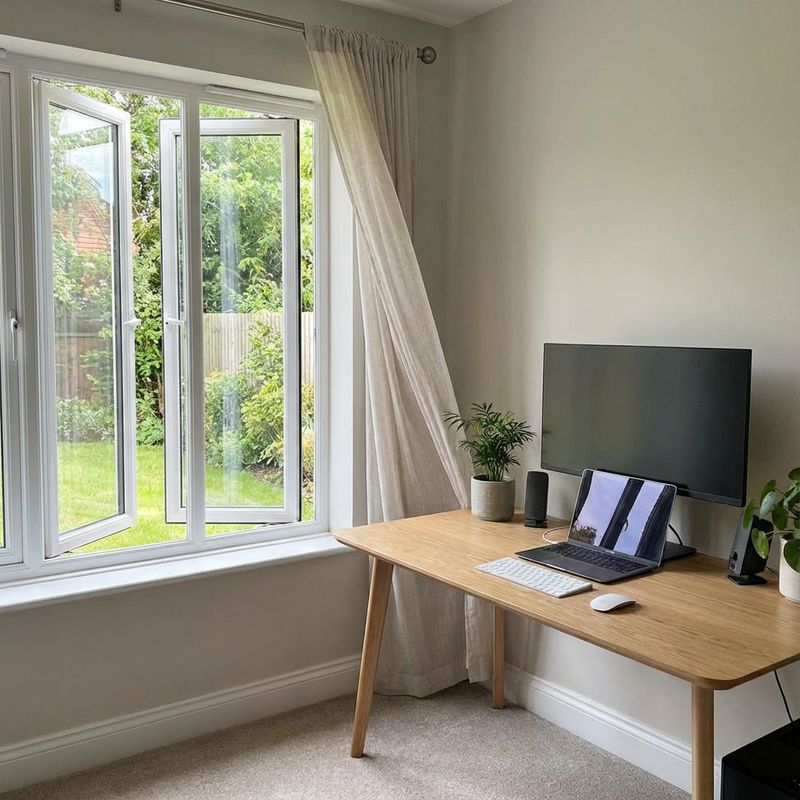
- Prioritize ventilation over isolation: Open door or window during work hours, even slightly. This prevents CO2 buildup and maintains air exchange. If privacy requires closed doors, open periodically or use a small fan to facilitate air movement.
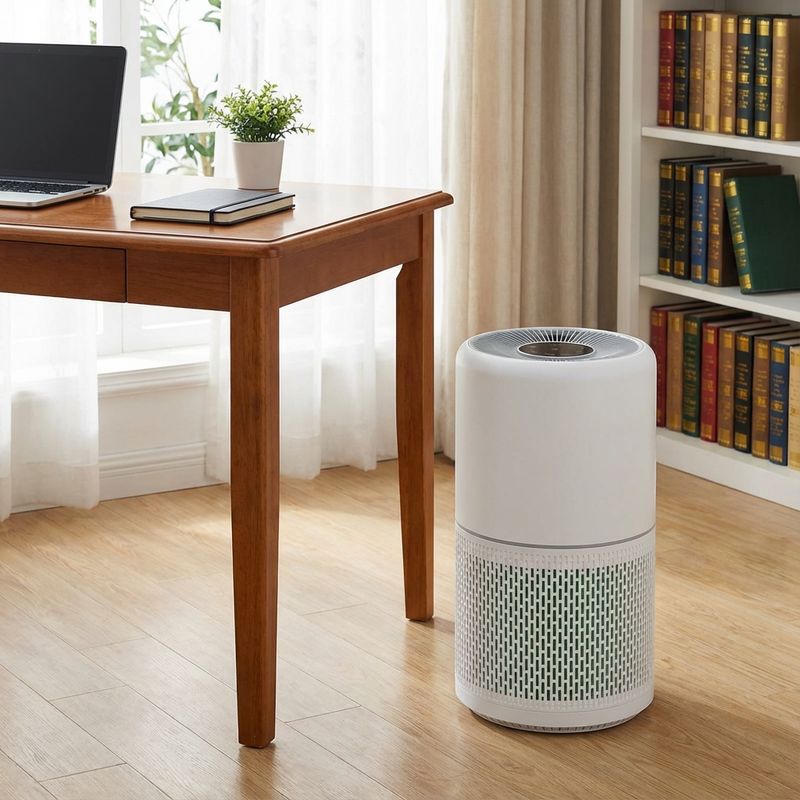
- Install a desk-friendly air purifier: Choose compact HEPA unit sized for your office square footage. Position on or near desk for maximum localized benefit. Run continuously on low setting.
- Minimize dust-collecting surfaces: Keep desk clear of unnecessary papers, books, decorations. Less surface area means less dust accumulation and easier cleaning.
- Dust desk and equipment weekly: Wipe down desk, keyboard, monitor, and electronics with microfiber cloth to remove particle buildup that becomes airborne with use.
- Take outdoor breaks: Step outside for 5-10 minutes mid-morning and mid-afternoon. This resets CO2 exposure and provides immediate cognitive refresh.
- Manage electronics heat: Ensure computers have adequate ventilation. Use laptop stands to improve airflow. Heat from electronics makes air feel stale faster.
- Choose low-VOC office furniture: If furnishing a new office, select desks and chairs with low emissions certifications. Air out new furniture before daily use.
When Home Office Air Quality Efforts Are Not Enough
Sometimes standard home office air quality improvements fall short:
- Persistent headaches, fatigue, or difficulty concentrating despite ventilation may indicate whole-home air quality issues, HVAC problems, or hidden mold requiring professional assessment.
- Respiratory symptoms that worsen during work hours despite HEPA filtration suggest specific allergen sensitivities or chemical exposures needing targeted identification and mitigation.
- Consistently feeling better outdoors or in other rooms indicates office-specific problems—poor ventilation design, furniture off-gassing, or inadequate HVAC delivery to that space.
If basic fixes do not resolve office air quality impacts on work performance or health, consult HVAC professionals for ventilation assessment or indoor air quality specialists for comprehensive testing.
Home Office Air Quality Improvement Checklist
Use this checklist to systematically improve your home office air quality:
- Open door or window during work hours for air exchange
- If door must stay closed, open periodically or use fan for circulation
- Install desk-sized HEPA air purifier, run continuously on low
- Minimize desk clutter and dust-collecting items
- Wipe down desk, keyboard, and electronics weekly
- Vacuum office floor with HEPA vacuum weekly
- Take outdoor breaks mid-morning and mid-afternoon
- Ensure electronics have adequate ventilation to reduce heat
- Use laptop stand to improve device airflow
- Choose low-VOC furniture when setting up new office space
- Air out new office furniture before daily use
- Monitor for afternoon fatigue patterns (may indicate CO2 buildup)
Key Takeaways
- Home office air quality directly affects cognitive performance—elevated CO2 in closed offices impairs focus, decision-making, and productivity measurably.
- Ventilation is the highest-priority intervention. Opening doors or windows prevents CO2 buildup that causes afternoon fatigue and concentration difficulties.
- HEPA air purifiers on desks provide localized particle removal without noise disruption, particularly beneficial in smaller office spaces.
- Regular outdoor breaks reset CO2 exposure and provide immediate cognitive refresh, often misattributed to "getting away from work" rather than air quality improvement.
Frequently Asked Questions
Why do I feel tired in my home office by afternoon?
Often CO2 buildup from working in a closed room. CO2 levels above 1,000 ppm impair cognitive function and cause fatigue. Open door/window or take outdoor breaks to reset. Ventilation makes a dramatic difference.
Should I leave my office door open while working?
Yes, when possible for air circulation. If privacy or noise requires closing, open periodically (every 1-2 hours) or use a fan. Continuous closed-door work leads to CO2 and stuffiness problems.
Are air purifiers worth it for home offices?
Yes, particularly desk-sized HEPA units. They reduce particles that cause respiratory irritation and are especially helpful for allergy sufferers. Run on low continuously—noise is minimal and provides white noise many find helpful.
How often should I clean my home office for air quality?
Wipe desk and electronics weekly to remove dust. Vacuum floor weekly with HEPA vacuum. Keeping surfaces clear of clutter makes cleaning easier and reduces dust accumulation between cleanings.
Do standing desks improve home office air quality?
Not directly, but movement helps. Standing and moving around office improves circulation and may reduce subjective stuffiness. For air quality itself, focus on ventilation and filtration rather than desk type.
Want to improve your home's air quality?
Take our comprehensive air quality quiz to get personalized recommendations.
Take the Quiz