Introduction
Most homes should change their air filter every 1–3 months.
That simple guideline answers the question most homeowners are asking when they search how often should you change your home air filter.
The exact timing depends on your home, your HVAC system, and what’s happening inside your living space. In most homes we assess, filters are either changed too infrequently or replaced only when airflow problems become obvious.
Changing your air filter on the right schedule is one of the easiest ways to protect indoor air quality, improve HVAC efficiency, and reduce dust, allergens, and airborne particles in your home.
What This Means for Your Home
Your air filter does more than protect your HVAC system. It directly affects the air you breathe.
From real-world indoor air quality assessments, homeowners commonly notice:
- More dust settling on surfaces
- Allergy symptoms lingering indoors
- HVAC systems running longer than usual
In many cases, the root cause is a clogged or overdue air filter restricting airflow and allowing pollutants to recirculate.
A clean filter helps:
- Capture dust, pollen, pet dander, and fine particles
- Support consistent airflow
- Reduce strain on your heating and cooling system
Symptoms and Signs It’s Time to Change Your Air Filter
Even if you’ve lost track of time, your home often gives you clues.
Common signs we see during home assessments include:
- Visible dust buildup on vents or furniture
- Reduced airflow from supply registers
- HVAC system cycling more frequently
- Increased allergy or asthma symptoms indoors
- Filter appears gray, matted, or visibly clogged
If you notice any of these, it’s usually time to replace your filter—regardless of the calendar.
Common Causes of Faster Filter Buildup
Some homes need more frequent air filter changes than others.
Factors that shorten filter life include:
- Pets that shed dander and hair
- Occupants with allergies or asthma
- Smoking or vaping indoors
- Recent renovations or construction
- High outdoor pollen or wildfire smoke
- Older or leakier ductwork
In homes with pets or allergy concerns, we often see filters needing replacement closer to every 30 days.
How Often Should You Change Your Home Air Filter?
General Replacement Guidelines
Use this as a practical starting point:
- Every 30 days
- Homes with pets
- Allergy or asthma sufferers
- High-efficiency (dense) filters
- Every 60 days
- Average households
- One or two occupants
- No pets
- Every 90 days
- Vacation homes
- Low occupancy
- Minimal indoor pollution sources
Higher MERV-rated filters may capture more particles but can clog faster if airflow demand is high.
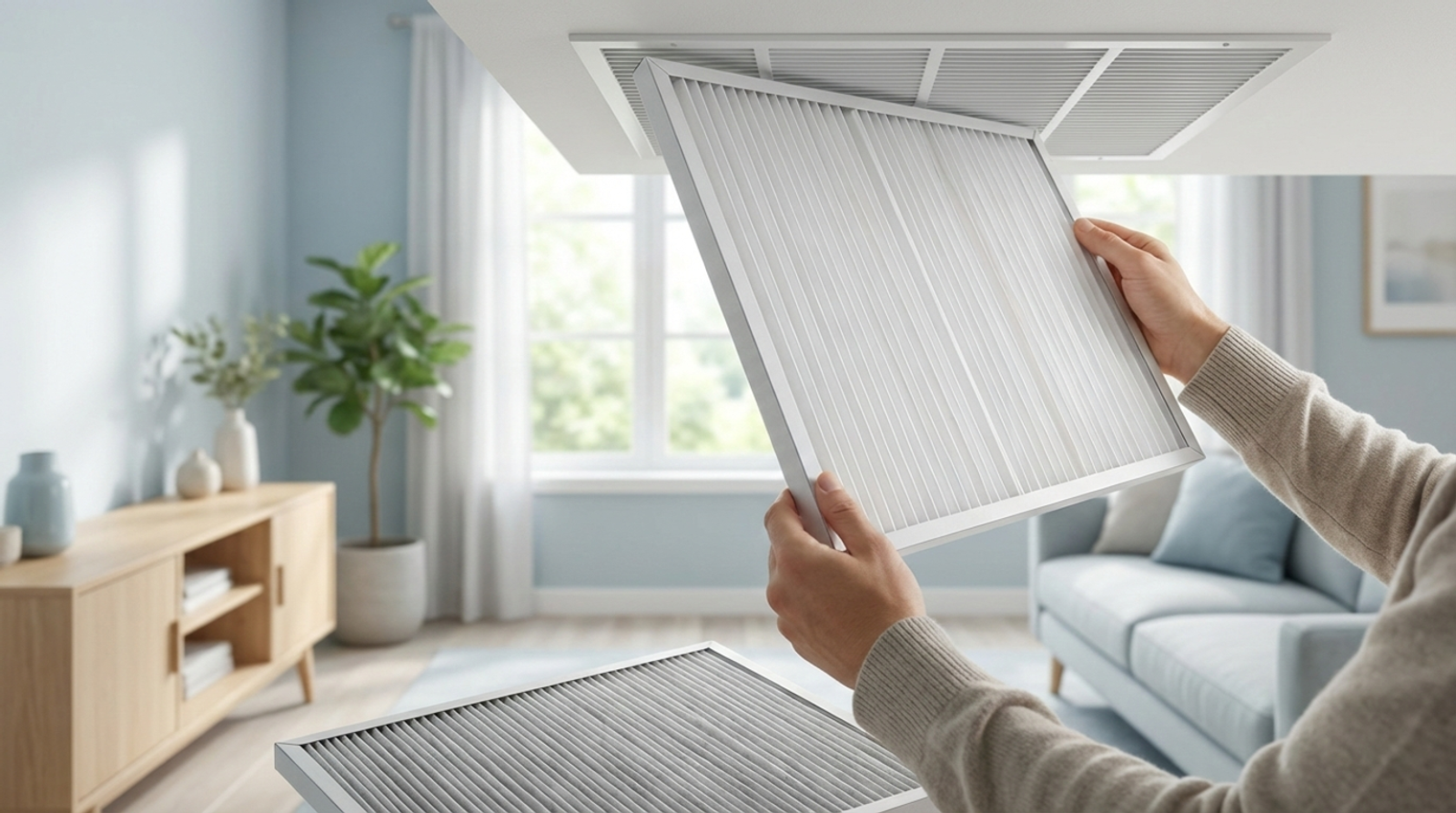
How to Change Your Air Filter (Step-by-Step)
Changing your filter is straightforward and usually takes less than five minutes.
- Turn off your HVAC system
- Locate the filter slot (return grille or air handler)
- Note the airflow arrow on the old filter
- Insert the new filter in the same orientation
- Secure the cover and restart the system
- Write the install date on the filter frame
If you’re unsure about filter size or placement, your HVAC manual or installer can confirm the correct fit.
Professional Insight: When to Get Expert Help
If you’re changing filters regularly but still noticing dust, odors, or poor airflow, it may indicate a deeper issue.
During professional assessments, we often find:
- Improper filter sizing
- Duct leaks pulling in attic or crawlspace air
- Systems not designed for high-MERV filters
- Poor return air placement
An indoor air quality professional or HVAC technician can evaluate whether your system setup supports the filter you’re using.
Prevention Tips for Better Filter Performance
To keep filters working effectively:
- Set calendar reminders for replacements
- Keep spare filters on hand
- Match filter MERV rating to system capability
- Seal obvious duct leaks if accessible
- Vacuum return vents periodically
Consistency matters more than perfection.
Conclusion
Knowing how often you should change your home air filter is one of the simplest ways to protect your indoor air quality.
In most homes, replacing filters every 1–3 months prevents airflow problems, reduces allergens, and supports healthier air. From what we see in real homes, consistency is the key—not waiting until problems show up.
A clean filter is a small habit with meaningful impact.
People Also Ask: Quick Answers
Can I wait until my air filter looks dirty?
No. Many filters restrict airflow before they appear visibly dirty.
Does changing my air filter really improve indoor air quality?
Yes. Regular replacement reduces recirculated dust, allergens, and fine particles.
Is a higher MERV filter always better?
Not always. Some systems can’t handle dense filters without airflow loss.
What happens if I don’t change my air filter?
You risk reduced airflow, higher energy use, and increased indoor pollutants.
Frequently Asked Questions
How often should you change your home air filter with pets?
Most pet-owning households benefit from changing filters every 30–45 days.
Do washable air filters last longer?
They last longer structurally but still require frequent cleaning to remain effective.
Does filter thickness matter?
Yes. Thicker filters (4–5 inches) often last longer than 1-inch filters.
Should renters change air filters?
Yes. Even renters benefit from regular filter changes for health and comfort.
Does changing the filter save energy?
A clean filter helps maintain airflow, which can reduce HVAC energy usage.
Want to improve your home's air quality?
Take our comprehensive air quality quiz to get personalized recommendations.
Take the Quiz