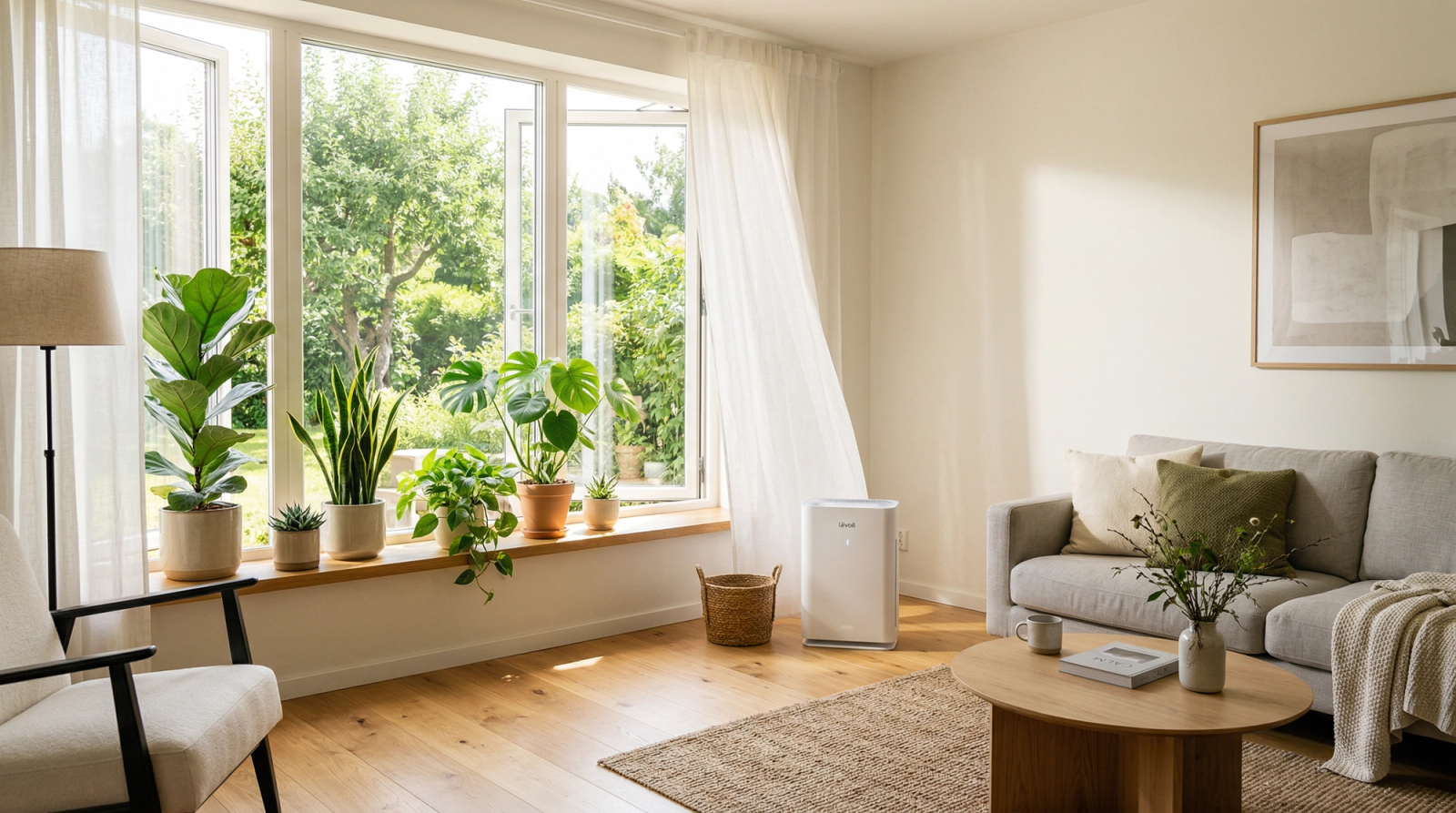
If you're looking to improve indoor air quality at home, the good news is that most meaningful changes are straightforward. You don't need expensive equipment or a full renovation. A combination of better ventilation, basic filtration, humidity awareness, and a few habit adjustments can make a noticeable difference in how your home feels — and how you feel in it.
This guide covers the core strategies that matter most, based on what actually moves the needle for typical homes. Think of it as your starting point — not a product pitch.
What This Means for Your Home
Every home has a unique air quality profile shaped by its age, layout, climate zone, and how the people inside it live. A tightly sealed new-construction home traps different pollutants than a drafty 1950s ranch. A household with pets faces different challenges than one with a woodworking hobby in the garage.
The point isn't to panic — it's to recognize that indoor air quality is something you can actively manage. Small, targeted improvements tend to have outsized effects. And understanding your home's specific weak points makes it much easier to prioritize what to fix first.
What Science Tells Us
Research consistently shows that indoor air can be two to five times more polluted than outdoor air. The primary reasons are simple: modern homes are built to be energy-efficient, which means less natural air exchange. Pollutants from cooking, cleaning products, furniture, and even the building materials themselves accumulate when ventilation is limited.
The three pillars of improving indoor air quality are well established: source control (reducing what enters the air), ventilation (diluting and removing polluted air), and filtration (capturing particles that remain). Most effective IAQ strategies use some combination of all three.
Common Misunderstandings
Air purifiers solve everything. Air purifiers help with particles and some gases, but they can't fix ventilation problems, control humidity, or eliminate pollutants at the source. They're one tool in the toolkit — not the whole toolkit.
If it doesn't smell bad, the air is fine. Many harmful pollutants — including PM2.5, radon, and carbon monoxide — are completely odorless. A lack of smell is not a reliable indicator of clean air.
Newer homes have better air quality. Newer homes are often more airtight, which can actually trap pollutants inside more effectively. Without mechanical ventilation, a well-sealed home can have worse air quality than an older, draftier one.
Houseplants clean the air. While plants do absorb some gases in lab settings, the effect in a real home is negligible. You'd need hundreds of plants in a single room to match the output of a basic air purifier.
Practical Takeaways
Here's a realistic starting checklist for improving indoor air quality at home:
- Run kitchen and bathroom exhaust fans during and 15 minutes after use
- Replace HVAC filters every 1–3 months with a MERV 8–13 rated filter
- Keep indoor humidity between 30–50% using a dehumidifier or humidifier as needed
- Switch to unscented or low-VOC cleaning and personal care products
- Open windows for 10–15 minutes daily when outdoor air quality is good
- Vacuum weekly with a HEPA-filter vacuum and dust with a damp cloth
- Consider a portable HEPA air purifier for bedrooms or high-traffic rooms
Bottom Line
Improving indoor air quality doesn't require a big budget or a complete home overhaul. The most effective approach combines better ventilation, reasonable filtration, humidity awareness, and reducing pollution at the source. Start with the basics, address the issues most relevant to your home, and build from there.
You breathe roughly 11,000 liters of air a day — most of it indoors. Even small improvements are worth making.
Frequently Asked Questions
What is the single most effective way to improve indoor air quality?
Improving ventilation is usually the highest-impact first step. Running exhaust fans, opening windows when outdoor air is clean, and ensuring your HVAC system circulates fresh air all help dilute indoor pollutants.
Do I need to buy an air purifier to have good indoor air?
Not necessarily. Ventilation, source control, and basic filtration through your HVAC system handle most issues. A HEPA air purifier helps in specific situations like allergies, pet dander, or wildfire smoke.
How quickly will I notice a difference after making changes?
Some changes — like improving ventilation or running an air purifier — can produce noticeable results within hours. Others, like reducing off-gassing from furniture, take days to weeks.
Is professional air quality testing worth it?
For most homes, starting with basic improvements and a consumer-grade IAQ monitor is enough. Professional testing is worthwhile if you suspect mold, radon, or persistent unexplained symptoms.
Want to improve your home's air quality?
Take our comprehensive air quality quiz to get personalized recommendations.
Take the Quiz