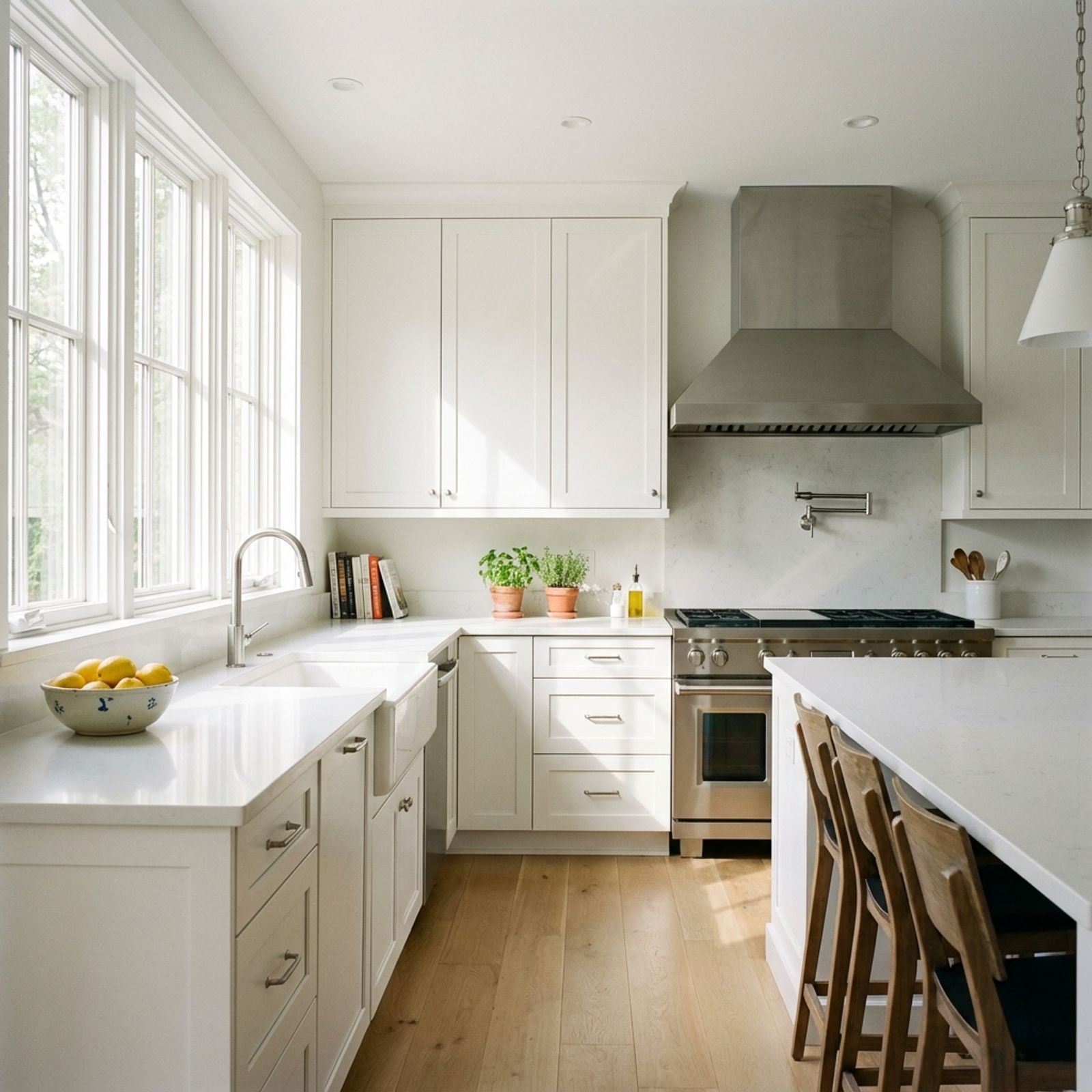
Kitchens generate more indoor air pollution than any other room in most homes. Cooking, combustion, moisture, and cleaning activities all impact kitchen air quality—and that contaminated air does not stay contained. It circulates throughout your entire home through open doorways, ventilation systems, and natural air currents.
Whether you cook daily or occasionally, the type of stove you use, how you ventilate, and how you manage moisture all significantly affect indoor air quality. Gas stoves emit nitrogen dioxide and particulates. Electric stoves still produce cooking PM2.5. Poor ventilation traps odors, grease particles, and combustion byproducts.
This guide explains the unique air quality challenges kitchens present and provides evidence-based strategies to protect the air you breathe while cooking and cleaning.
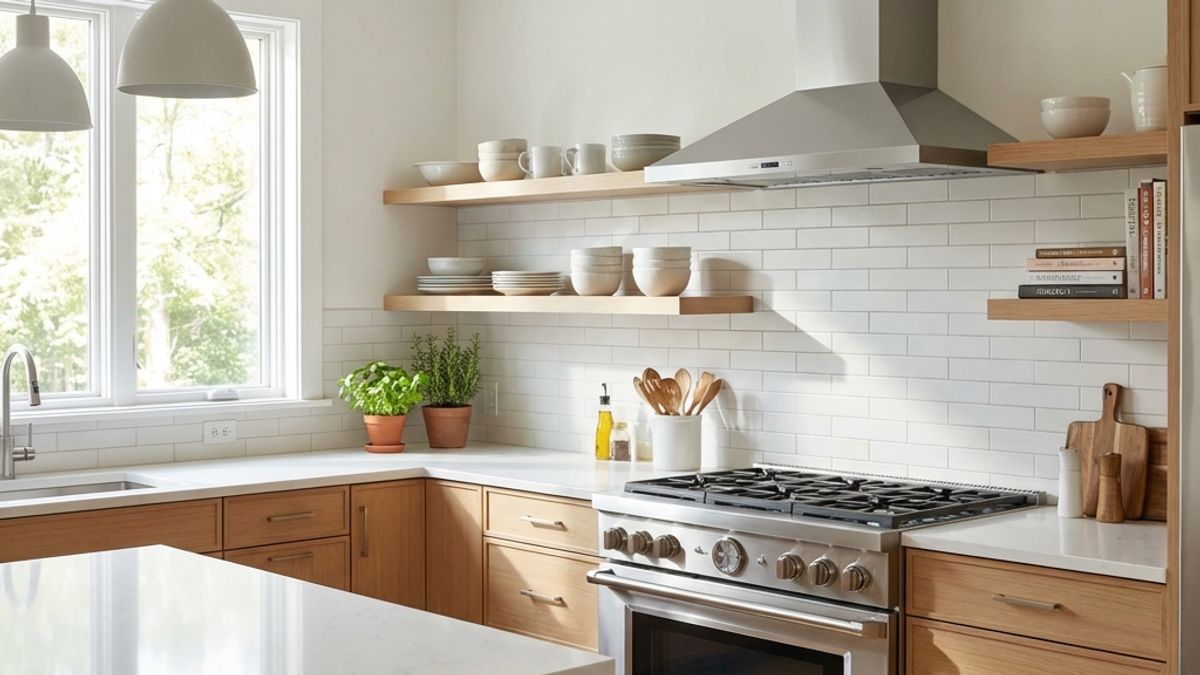
What Kitchen Air Quality Means for Your Home
Every time you cook, you release particles and gases into your kitchen air. High-heat cooking like frying or grilling produces the most PM2.5—fine particles that penetrate deep into lungs. Gas stoves continuously emit nitrogen dioxide even when not in use due to pilot lights and incomplete combustion.
These pollutants do not stay in the kitchen. Within minutes, they spread to adjacent rooms and throughout your home. In homes with poor ventilation or small floor plans, kitchen cooking can raise whole-house particulate levels to unhealthy ranges, especially during and after meal preparation.
For households with children, elderly members, or anyone with asthma or respiratory conditions, kitchen air quality requires particular attention. Even short-term exposure to cooking pollutants can trigger symptoms.
What Science Says About Kitchen Air Pollution
Research consistently shows that cooking is a major source of indoor PM2.5. Studies measuring real-time air quality during cooking find particulate spikes that exceed outdoor air quality standards in many cases. Gas stoves, in particular, have drawn scientific scrutiny for nitrogen dioxide emissions linked to increased asthma risk in children.
Comparative studies of gas versus electric stoves find that while both produce cooking emissions, gas combustion adds nitrogen dioxide, carbon monoxide, and formaldehyde to the mix. Electric stoves eliminate combustion byproducts but still generate particulates from heated cooking oil and food.
The good news: effective range hood ventilation reduces pollutant levels by 50-90% when used correctly. However, many range hoods are undersized, improperly installed, or simply not turned on during cooking.
Common Myths About Kitchen Air Quality
Several misconceptions prevent homeowners from effectively managing kitchen air quality:
- Myth: Opening a window while cooking is enough. Reality: Windows help but cannot match the effectiveness of a properly sized range hood that vents outdoors.
- Myth: Recirculating range hoods clean the air. Reality: Recirculating hoods without outdoor exhaust only filter grease and odors—they do not remove combustion gases or fine particles effectively.
- Myth: Electric stoves do not produce air pollution. Reality: While cleaner than gas, electric stoves still generate PM2.5 from heated cooking oil and burnt food.
- Myth: Kitchen odors are just cosmetic. Reality: Persistent cooking odors indicate poor ventilation and the presence of airborne particles and VOCs.
Practical Steps to Improve Kitchen Air Quality
Focus on these evidence-based strategies for your kitchen:
- Use your range hood every time you cook: Turn it on before heating begins and run for 5-10 minutes after cooking ends. This captures the most pollutants.
- Verify outdoor venting: Ensure your range hood vents outside, not recirculates. Recirculating models are far less effective at removing pollutants.
- Choose rear burners when possible: Pollutants from rear burners are more easily captured by overhead hoods than front burner emissions.
- Reduce high-heat cooking: Lower temperatures produce fewer particles. Use lids to contain steam and reduce splattering.
- Manage moisture immediately: Run exhaust fans during and after cooking, especially when boiling water or steaming. Excess moisture encourages mold growth.
- Consider switching from gas to electric or induction: If replacing your stove, electric or induction eliminates combustion byproducts entirely.
- Supplement with air purifier: Place a HEPA air purifier near the kitchen but outside the cooking zone to capture particles that escape the range hood.
When Kitchen Ventilation Is Not Enough
Sometimes standard kitchen ventilation approaches fall short:
- Persistent cooking odors hours after meals indicate inadequate ventilation capacity. Your range hood may be undersized or improperly installed.
- Respiratory symptoms during or after cooking suggest exposure to nitrogen dioxide or PM2.5. Consider professional indoor air quality testing to identify specific pollutants.
- Grease buildup on cabinets or walls near the stove shows that airborne particles are not being captured. This requires better hood performance or supplemental ventilation.
If basic improvements do not resolve issues, consult an HVAC professional about upgrading to a higher-CFM range hood or adding makeup air ventilation for proper kitchen air exchange.
Kitchen Air Quality Improvement Checklist
Use this checklist to systematically improve kitchen air quality:
- Turn on range hood before cooking begins and run 5-10 minutes after
- Verify range hood vents outdoors (not recirculating)
- Clean or replace range hood filters monthly
- Use rear burners when possible for better capture
- Reduce high-heat cooking methods (frying, broiling)
- Use lids to contain steam and reduce particle emissions
- Open windows for additional ventilation during cooking if outdoor air quality permits
- Consider upgrading to electric or induction stove when replacing appliances
- Keep kitchen humidity between 30-50% to prevent mold
- Place HEPA air purifier outside cooking zone to capture escaped particles
Key Takeaways
- Kitchens are the highest-pollution rooms in most homes, with cooking emissions affecting air quality throughout the house.
- Gas stoves emit nitrogen dioxide and other combustion byproducts; electric stoves are cleaner but still produce cooking PM2.5.
- Outdoor-venting range hoods used consistently during and after cooking provide the single most effective kitchen air quality improvement.
- Proper kitchen ventilation protects respiratory health and prevents cooking pollutants from spreading to bedrooms and living spaces.
Frequently Asked Questions
Are gas stoves really bad for indoor air quality?
Yes. Gas stoves emit nitrogen dioxide, carbon monoxide, and formaldehyde even when not in use. Studies link gas stove use to increased childhood asthma risk. Proper ventilation is essential if using gas.
Does my range hood need to vent outside?
For effective pollutant removal, yes. Recirculating hoods only filter grease and odors. They do not remove combustion gases or fine particles. Outdoor venting provides much better air quality improvement.
How long should I run my range hood when cooking?
Start before heating begins and run for 5-10 minutes after you finish cooking. This captures initial emissions and clears lingering particles and gases after the heat source turns off.
Can I use an air purifier instead of a range hood?
No. Air purifiers cannot replace range hoods. They work too slowly to capture cooking emissions at the source. Use both—a vented range hood during cooking and a HEPA purifier nearby to catch escaped particles.
Is electric cooking better than gas for air quality?
Yes. Electric and induction stoves eliminate combustion byproducts like nitrogen dioxide. They still produce PM2.5 from heated cooking oils, so ventilation remains important, but overall emissions are significantly lower than gas.
Want to improve your home's air quality?
Take our comprehensive air quality quiz to get personalized recommendations.
Take the Quiz