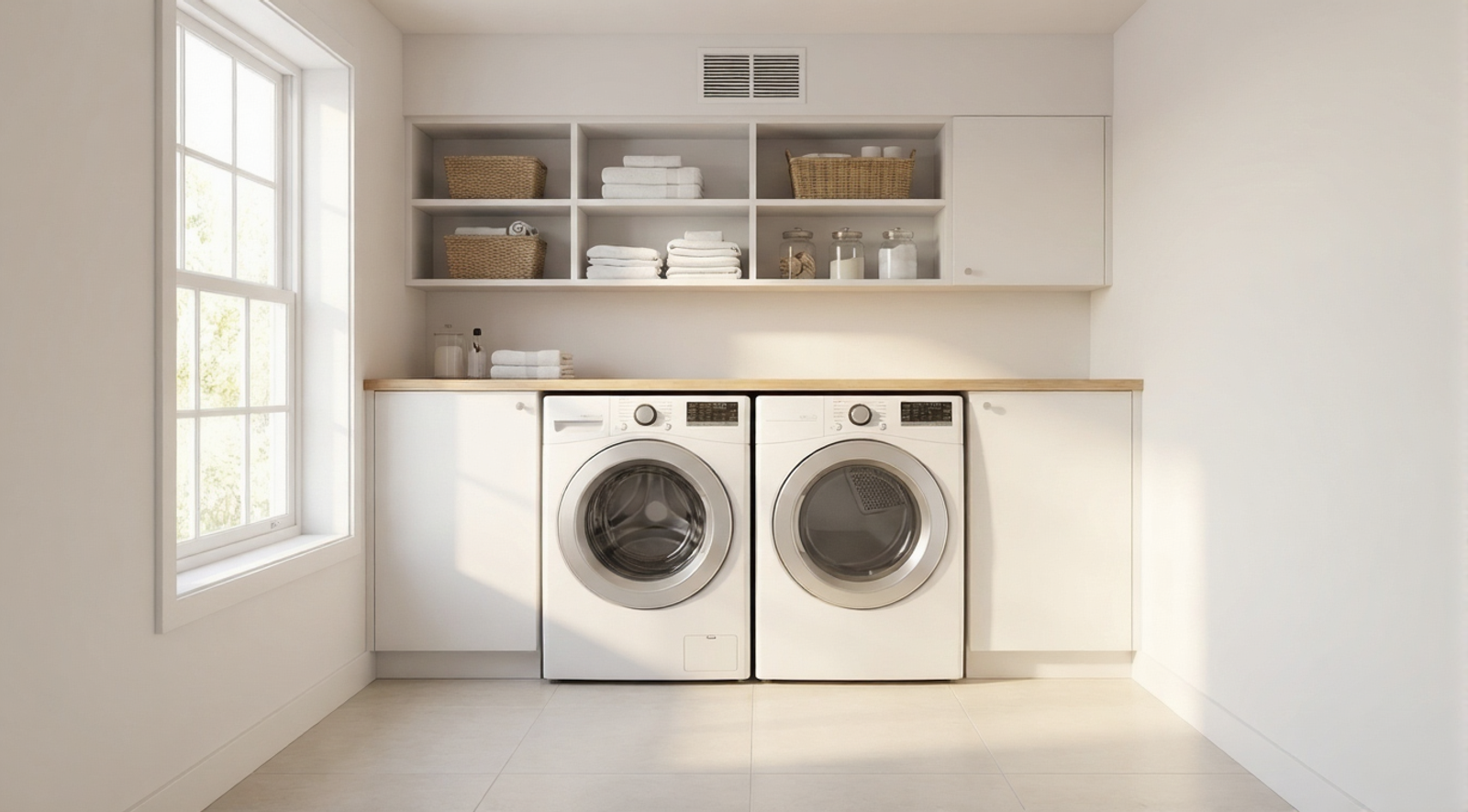
Laundry rooms present unique challenges for laundry room air quality. Dryers expel moisture and lint. Washing machines introduce humidity. Detergents, fabric softeners, and stain removers release VOCs. Without proper ventilation, these pollutants accumulate in the enclosed space and migrate into adjacent living areas.
Many laundry rooms lack windows or adequate exhaust ventilation. The combination of moisture from wet clothes, chemical emissions from cleaning products, and heat from dryers creates conditions that promote mold growth and concentrate airborne pollutants. Dryer exhaust systems that vent improperly or become clogged worsen these problems.
This guide explains the specific air quality challenges laundry rooms present and provides evidence-based strategies to manage moisture, reduce chemical exposure, and ensure proper ventilation for healthier indoor air.
What Laundry Room Air Quality Means for Your Home
Poor laundry room air quality affects more than just the laundry space. Moisture from washing and drying migrates to adjacent rooms, raising whole-home humidity. VOCs from laundry products circulate through HVAC systems or natural airflow. Mold that grows in damp laundry rooms releases spores that spread throughout the house.
Fragrance chemicals in detergents and fabric softeners are among the most common indoor VOC sources. These compounds can trigger respiratory irritation, headaches, and allergic reactions in sensitive individuals. Even if you do not experience symptoms directly in the laundry room, exposure occurs when wearing laundered clothes or sleeping on bedding.
Dryer exhaust problems introduce additional risks. Lint accumulation in ducts restricts airflow, causing moisture and combustion gases to back up into living spaces. In gas dryers, inadequate venting can introduce carbon monoxide indoors.
What Science Says About Laundry Room Air Quality
Research on laundry product emissions reveals that scented detergents and fabric softeners release numerous VOCs, including terpenes, acetaldehyde, and synthetic musks. Studies measuring air quality during and after laundry find that VOC concentrations spike significantly, especially when using scented products and dryer sheets.
Moisture measurements in laundry rooms show that washing and drying activities can temporarily raise humidity above 70%. Without ventilation, this elevated humidity persists for hours. Repeated exposure creates conditions favorable for mold colonization on walls, ceilings, and stored items.
Dryer exhaust studies demonstrate that proper outdoor venting is essential. Homes with blocked or disconnected dryer vents experience elevated indoor humidity and lint accumulation. Regular duct cleaning maintains airflow and prevents moisture backup.
Common Myths About Laundry Room Air Quality
Several misconceptions prevent homeowners from effectively managing laundry room air quality:
- Myth: Fragrance makes laundry products safer or cleaner. Reality: Fragrance is composed of VOCs. Scented products release more indoor air pollutants than unscented alternatives. Clean does not require fragrance.
- Myth: Indoor dryer vent kits are as good as outdoor venting. Reality: Indoor kits trap lint and introduce moisture and heat into living spaces. They should only be used temporarily. Outdoor venting is always preferred.
- Myth: Natural laundry products are always low-VOC. Reality: Some plant-based detergents contain terpenes that emit VOCs. Read labels and choose fragrance-free products regardless of "natural" marketing.
- Myth: Dryer vents only need cleaning if the dryer runs slowly. Reality: Even dryers performing normally accumulate lint in ductwork. Annual cleaning prevents moisture backup and fire hazards before performance declines.
Practical Steps to Improve Laundry Room Air Quality
Focus on these evidence-based strategies for laundry room air quality:
- Switch to fragrance-free products: Choose unscented detergents, skip fabric softener and dryer sheets entirely. This eliminates the primary source of laundry-related VOCs.
- Verify outdoor dryer venting: Ensure your dryer vents directly outside, not into attics, crawl spaces, or living areas. Check vent hood opens properly when dryer runs.
- Clean dryer vent annually: Hire professionals or use vent cleaning kits to remove lint from the entire duct run. Clean lint trap after every load.
- Install ventilation: Add an exhaust fan if your laundry room lacks one. Run during laundry activities and for 15-20 minutes after to remove moisture and chemicals.
- Keep laundry room door closed: Prevent moisture and VOCs from spreading to the rest of your home during and after laundry. Consider adding weather stripping.
- Hang dry when possible: Air-drying clothes outdoors or in well-ventilated spaces reduces dryer use and associated moisture/energy contributions to indoor air.
- Address leaks immediately: Fix washing machine hoses, connections, or drainage issues that introduce continuous moisture.
When Laundry Room Air Quality Efforts Are Not Enough
Sometimes standard laundry room air quality improvements fall short:
- Persistent musty odors or visible mold despite ventilation indicate moisture problems beyond laundry activities. Check for plumbing leaks, foundation moisture, or inadequate ventilation capacity.
- Dryer taking longer to dry loads even after vent cleaning suggests appliance malfunction, ductwork damage, or venting configuration problems. Professional assessment may be needed.
- Respiratory symptoms or headaches triggered specifically by laundry activities may indicate product sensitivity. Try switching brands, eliminating all fragranced products, or consulting allergists for testing.
If basic interventions do not resolve laundry room air quality problems, consult HVAC professionals for ventilation assessment or indoor air quality specialists for comprehensive testing.
Laundry Room Air Quality Improvement Checklist
Use this checklist to systematically improve laundry room air quality:
- Switch to fragrance-free, unscented laundry detergent
- Eliminate fabric softener and dryer sheets
- Verify dryer vents directly outdoors (not attic/crawlspace)
- Check dryer vent hood opens properly when dryer runs
- Clean dryer lint trap after every load
- Schedule annual professional dryer vent duct cleaning
- Install exhaust ventilation if laundry room lacks it
- Run exhaust fan during laundry and 15-20 minutes after
- Keep laundry room door closed during and after use
- Fix washing machine leaks and connection issues promptly
- Air-dry clothes outdoors or in well-ventilated areas when possible
- Monitor for mold on walls, ceilings, and stored items
Key Takeaways
- Laundry room air quality problems stem primarily from VOCs in fragranced products, moisture from washing and drying, and improper dryer venting.
- Switching to fragrance-free laundry products eliminates the largest source of laundry-related indoor air pollution.
- Proper dryer venting outdoors and annual duct cleaning prevent moisture backup and maintain safe, efficient operation.
- Exhaust ventilation in laundry rooms protects the entire home by preventing moisture and chemicals from migrating to living spaces.
Frequently Asked Questions
Are fragrance-free laundry detergents as effective as scented ones?
Yes. Fragrance does not contribute to cleaning performance. It is purely for scent. Fragrance-free detergents clean just as effectively while eliminating VOC emissions. Clean laundry has no scent.
How often should I clean my dryer vent duct?
Annually for most households, more frequently if you do large amounts of laundry or notice longer drying times. Professional duct cleaning removes lint throughout the entire vent run, not just the accessible portions.
Can I vent my dryer indoors to save energy in winter?
No. Indoor venting introduces excessive moisture, lint, and combustion byproducts (if gas dryer) into living spaces. The humidity and lint create mold and air quality problems far worse than any heating benefit.
Do I need an exhaust fan in my laundry room?
Yes, especially if your laundry room lacks windows. Exhaust fans remove moisture and chemical vapors before they spread to other rooms. Run during laundry and for 15-20 minutes after.
Why does my laundry room smell musty?
Musty odors indicate mold growth from excess moisture. Common causes: inadequate ventilation, dryer vent problems, washing machine leaks, or keeping wet clothes in the room. Improve ventilation and fix moisture sources.
Want to improve your home's air quality?
Take our comprehensive air quality quiz to get personalized recommendations.
Take the Quiz