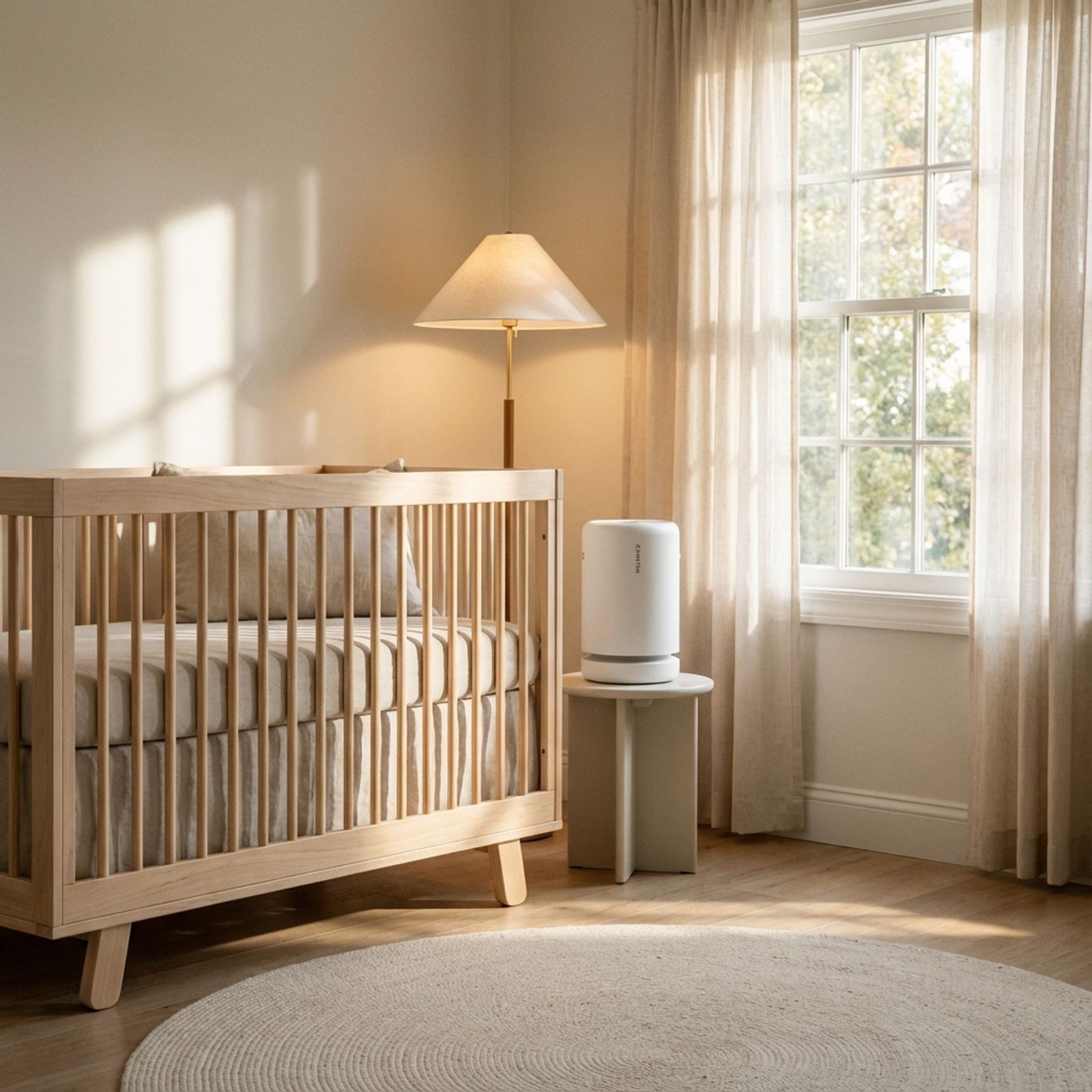
Nursery air quality deserves special attention because infants and young children are more vulnerable to air pollutants than adults. Their developing respiratory systems, higher breathing rates relative to body size, and more time spent sleeping and playing indoors increase exposure and potential health impacts from poor air quality.
New furniture, cribs, mattresses, and toys often off-gas VOCs. Paints and flooring release chemicals. Dust and allergens accumulate in carpets, bedding, and stuffed animals. Humidity levels that support infant comfort can also promote mold and dust mites if not properly managed. Parents creating nurseries or updating kids' rooms need strategies to minimize these exposures.
This guide explains the unique air quality considerations for children's spaces and provides evidence-based recommendations for creating healthier environments where kids sleep, play, and grow.
What Nursery Air Quality Means for Your Home
Children spend significant time in their bedrooms—sleeping, playing, and doing homework. For infants, the nursery becomes their primary environment for the first months of life. Poor air quality in these spaces has outsized impacts on developing bodies.
Respiratory rates in infants and young children are 2-3 times higher per kilogram of body weight than adults. They inhale more air relative to their size, increasing pollutant exposure. Their immune and respiratory systems are still developing, making them more susceptible to irritation, infection, and allergic sensitization.
New nursery items—cribs, changing tables, dressers, mattresses—often contain formaldehyde, flame retardants, and other chemicals that off-gas for weeks or months. Parents unknowingly introduce these exposures when furnishing rooms with brand-new products.
What Science Says About Kids' Room Air Quality
Research on children's environmental health consistently shows that indoor air quality affects respiratory development, allergy risk, and asthma incidence. Studies measuring VOC levels in newly furnished nurseries find elevated formaldehyde and other compounds that decrease over time but remain detectable for months.
Dust mite studies demonstrate that bedroom allergen levels correlate with asthma symptoms in children. Interventions reducing dust mites through better humidity control and regular cleaning show measurable symptom improvement.
Air quality monitoring in children's bedrooms reveals that PM2.5 and CO2 levels often exceed healthy thresholds, particularly in well-sealed rooms without adequate ventilation. HEPA filtration and proper air exchange reduce these concentrations effectively.
Common Myths About Nursery Air Quality
Several misconceptions prevent parents from effectively managing nursery air quality:
- Myth: New baby products are automatically safe. Reality: "New" does not mean non-toxic. Many products off-gas VOCs. Look for low-VOC certifications like GREENGUARD Gold for nursery items.
- Myth: Babies need very warm, humid rooms. Reality: Overheating and excessive humidity (>50%) promote dust mites and mold. Moderate temperatures (68-72°F) and 30-50% humidity are healthier.
- Myth: Air purifiers are optional extras. Reality: For children with asthma, allergies, or respiratory sensitivity, bedroom HEPA air purifiers provide measurable symptom relief.
- Myth: Carpet is cozier and therefore better for kids. Reality: Carpet traps allergens, dust, and spills. Hard flooring with washable area rugs is easier to keep clean and allergen-free.
Practical Steps to Improve Nursery Air Quality
Focus on these evidence-based strategies for creating healthier air in children's spaces:
- Choose low-VOC products: Look for GREENGUARD Gold certified cribs, mattresses, furniture, and paints. These products meet strict chemical emission limits designed for children's spaces.
- Air out new items before use: Unpack and ventilate new furniture, mattresses, and large items in a garage or well-ventilated space for several days before moving to the nursery.
- Install a HEPA air purifier: Choose one sized appropriately for the room square footage. Run continuously on low setting for constant particle removal.
- Maintain optimal humidity: Keep bedroom humidity between 30-50% using a hygrometer to monitor. Use humidifiers or dehumidifiers as needed seasonally.
- Minimize soft furnishings: Limit stuffed animals, heavy curtains, and unnecessary fabric items that collect dust. Wash bedding weekly in hot water.
- Choose hard flooring: Avoid wall-to-wall carpeting in nurseries and kids' rooms. Use washable area rugs if soft flooring is desired.
- Ensure adequate ventilation: Open windows regularly when outdoor air quality permits. Consider adding a small exhaust fan or improving whole-home ventilation.
- Use fragrance-free products: Avoid plug-in air fresheners, scented candles, and fragranced cleaning products in children's rooms. These add unnecessary VOCs.
When Nursery Air Quality Efforts Are Not Enough
Sometimes standard nursery air quality improvements fall short:
- Persistent respiratory symptoms, frequent colds, or worsening asthma despite air quality efforts may indicate specific allergen sensitivities requiring professional allergy testing and targeted interventions.
- Mold growth in nurseries despite humidity control suggests hidden moisture problems—plumbing leaks, exterior water infiltration, or inadequate ventilation requiring professional assessment.
- Ongoing chemical odors months after furnishing may warrant professional indoor air quality testing to identify specific VOCs and their sources.
If basic interventions do not resolve concerns about your child's breathing or sleep quality in their room, consult pediatricians, allergists, or indoor air quality professionals for comprehensive evaluation.
Nursery Air Quality Improvement Checklist
Use this checklist to systematically improve air quality in your child's room:
- Choose GREENGUARD Gold certified furniture, cribs, and mattresses
- Use low-VOC or zero-VOC paints for walls and furniture
- Air out new items in garage or ventilated space before bringing to nursery
- Install appropriately sized HEPA air purifier, run continuously
- Monitor humidity with hygrometer, maintain 30-50%
- Use hard flooring (wood, laminate) instead of wall-to-wall carpet
- Wash bedding weekly in hot water (130°F+)
- Limit stuffed animals; wash regularly in hot water
- Vacuum with HEPA vacuum twice weekly
- Avoid plug-in air fresheners and scented products
- Open windows regularly when outdoor air quality permits
- Keep room temperature moderate (68-72°F), not overheated
Key Takeaways
- Children are more vulnerable to air pollutants due to higher breathing rates, developing respiratory systems, and more time spent in bedrooms.
- GREENGUARD Gold certification identifies low-VOC nursery products that meet strict chemical emission standards for children's spaces.
- HEPA air purifiers, proper humidity control (30-50%), and hard flooring provide the most significant nursery air quality improvements.
- Airing out new furniture before use and avoiding fragranced products reduce chemical exposures that disproportionately affect children.
Frequently Asked Questions
What is GREENGUARD Gold certification for nursery products?
GREENGUARD Gold is a strict third-party certification for low chemical emissions. Products meeting this standard release minimal VOCs and meet California Section 01350 requirements—among the most protective standards for children and sensitive individuals.
Do babies need humidifiers in their rooms?
Not necessarily. Monitor humidity with a hygrometer. If levels drop below 30% (common in winter), add a humidifier. If above 50%, use a dehumidifier. Optimal range is 30-50% to prevent both dryness and mold/dust mites.
Is an air purifier necessary in a nursery?
Highly beneficial, especially for children with asthma, allergies, or respiratory sensitivity. HEPA purifiers remove particles that irritate developing lungs. Choose one sized for the room and run continuously on low for best results.
Should I avoid all new furniture for my baby's room?
No, but choose wisely. Look for GREENGUARD Gold certified products with low VOC emissions. Alternatively, use second-hand furniture that has already off-gassed, ventilate new items before use, and open windows regularly.
Is carpet or hard flooring better for kids' rooms?
Hard flooring is healthier. Carpet traps allergens, dust mites, spills, and pet dander. Wood, laminate, or tile with washable area rugs provides easier cleaning and better allergen control. This matters especially for children with allergies.
Want to improve your home's air quality?
Take our comprehensive air quality quiz to get personalized recommendations.
Take the Quiz