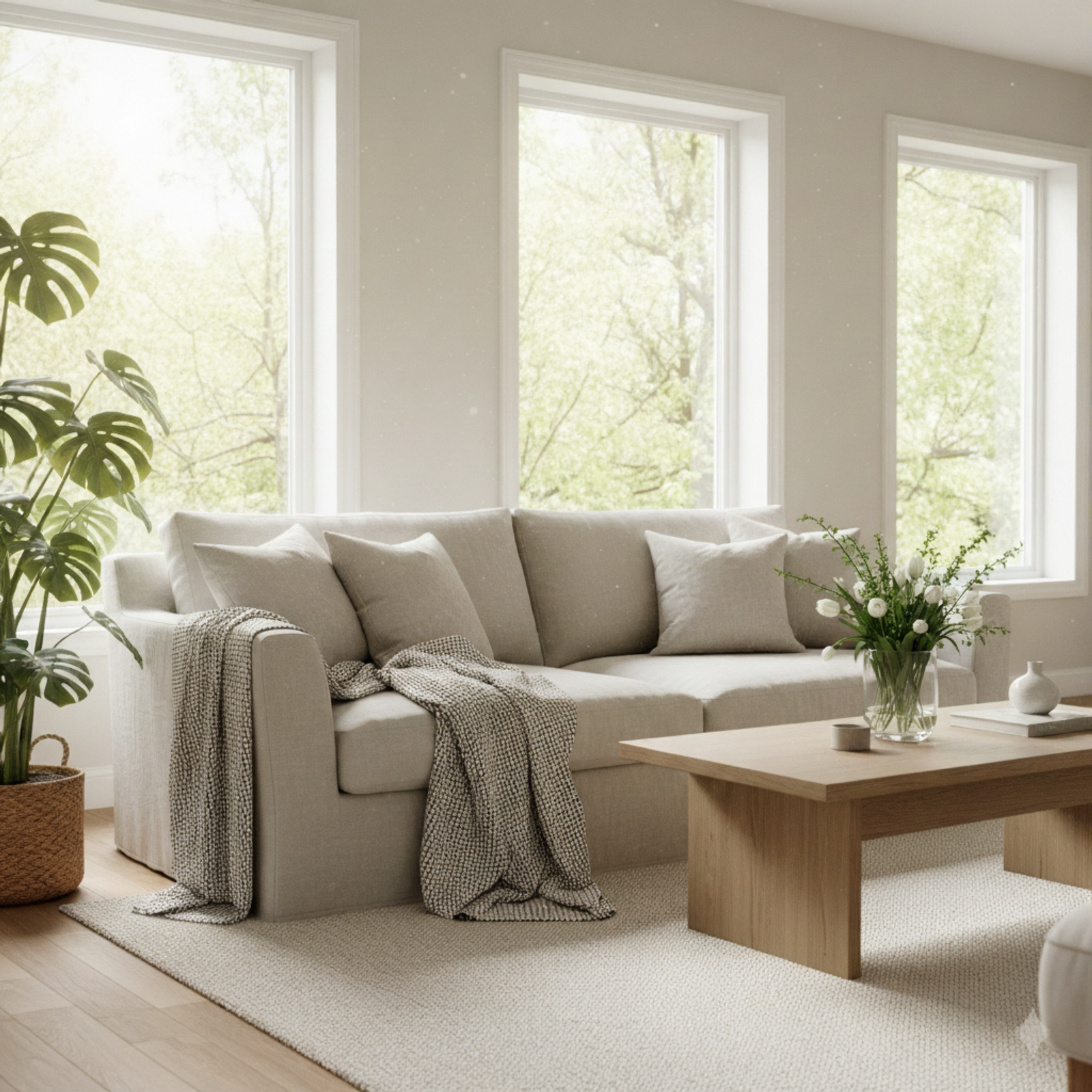
Spring allergies worsen indoors when pollen enters your home through open windows, on clothing, and via foot traffic. Many homeowners focus exclusively on outdoor allergen exposure while indoor pollen accumulation quietly triggers symptoms throughout allergy season.
Understanding how pollen migrates indoors and implementing practical barriers can significantly reduce spring allergies at home. This guide explains the science behind indoor pollen and provides actionable strategies to minimize allergen exposure in your living spaces.
What This Means for Your Home
Pollen does not stay outdoors. Tree, grass, and weed pollen grains attach to clothing, shoes, pet fur, and hair during outdoor activities. Opening windows during high pollen days invites allergens directly inside.
Indoor surfaces trap pollen where it continues triggering symptoms long after you come inside. Carpets, upholstery, bedding, and curtains accumulate pollen that becomes airborne with normal household activity. For allergy sufferers, home becomes an extension of outdoor exposure rather than a refuge.
What Science Tells Us
Research measuring indoor pollen levels shows that homes accumulate significant allergen concentrations during peak season. Studies tracking pollen entry pathways identify clothing, footwear, and open windows as primary vectors. Simply wearing outdoor clothing indoors transfers pollen to furniture and bedding.
HEPA air filtration studies demonstrate measurable reductions in airborne pollen when filters run continuously during allergy season. Intervention research shows that removing shoes at entry and changing clothes after outdoor exposure reduces indoor allergen levels substantially.
Common Misunderstandings
- Myth: Staying indoors avoids pollen exposure. Reality: Indoor pollen can match outdoor concentrations if entry pathways are unmanaged.
- Myth: Closing all windows eliminates indoor pollen. Reality: Pollen still enters on people, pets, and items. Window management helps but is not sufficient alone.
- Myth: Air purifiers work instantly for allergies. Reality: Continuous operation reduces cumulative allergen load over days and weeks, not immediately.
- Myth: Spring cleaning makes allergies worse. Reality: Proper HEPA vacuuming and damp dusting remove settled pollen. Poor cleaning methods that stir dust without capturing it worsen symptoms.
Practical Takeaways
To reduce allergens indoors during spring:
- Remove shoes at entry and store away from living areas
- Change clothes after extended outdoor time; keep outdoor clothes out of bedroom
- Shower before bed to remove pollen from hair and skin
- Run HEPA air purifiers continuously in bedrooms and main living areas
- Keep windows closed on high pollen days; check local pollen forecasts
- Vacuum with HEPA filter 2-3 times per week during peak season
- Wash bedding weekly in hot water to remove accumulated pollen
- Wipe down pets with damp cloth after outdoor time
Bottom Line
Spring allergies follow you indoors unless you actively manage pollen entry and accumulation. The most effective approach combines barrier strategies—removing shoes, changing clothes—with continuous HEPA filtration and regular cleaning. These measures work together to create meaningful relief without requiring medication increases or lifestyle restrictions.
Frequently Asked Questions
Should I keep all windows closed during spring?
On high pollen days, yes. Check local pollen forecasts and close windows when counts spike. On low pollen days or after rain, brief ventilation is fine. Timing matters more than absolute avoidance.
Do air purifiers really help with seasonal allergies?
Yes, when properly sized and run continuously. HEPA filters capture airborne pollen. Benefits accumulate over days. Position in bedrooms for maximum symptom relief during sleep.
How long does pollen stay active indoors?
Pollen grains remain allergenic for weeks to months indoors. They settle on surfaces and become airborne with activity. This is why regular cleaning matters throughout spring.
Is showering before bed really necessary for allergies?
Highly effective for reducing nighttime symptoms. Pollen accumulates in hair and on skin during the day. Showering before bed prevents transferring allergens to pillows and bedding.
Want to improve your home's air quality?
Take our comprehensive air quality quiz to get personalized recommendations.
Take the Quiz