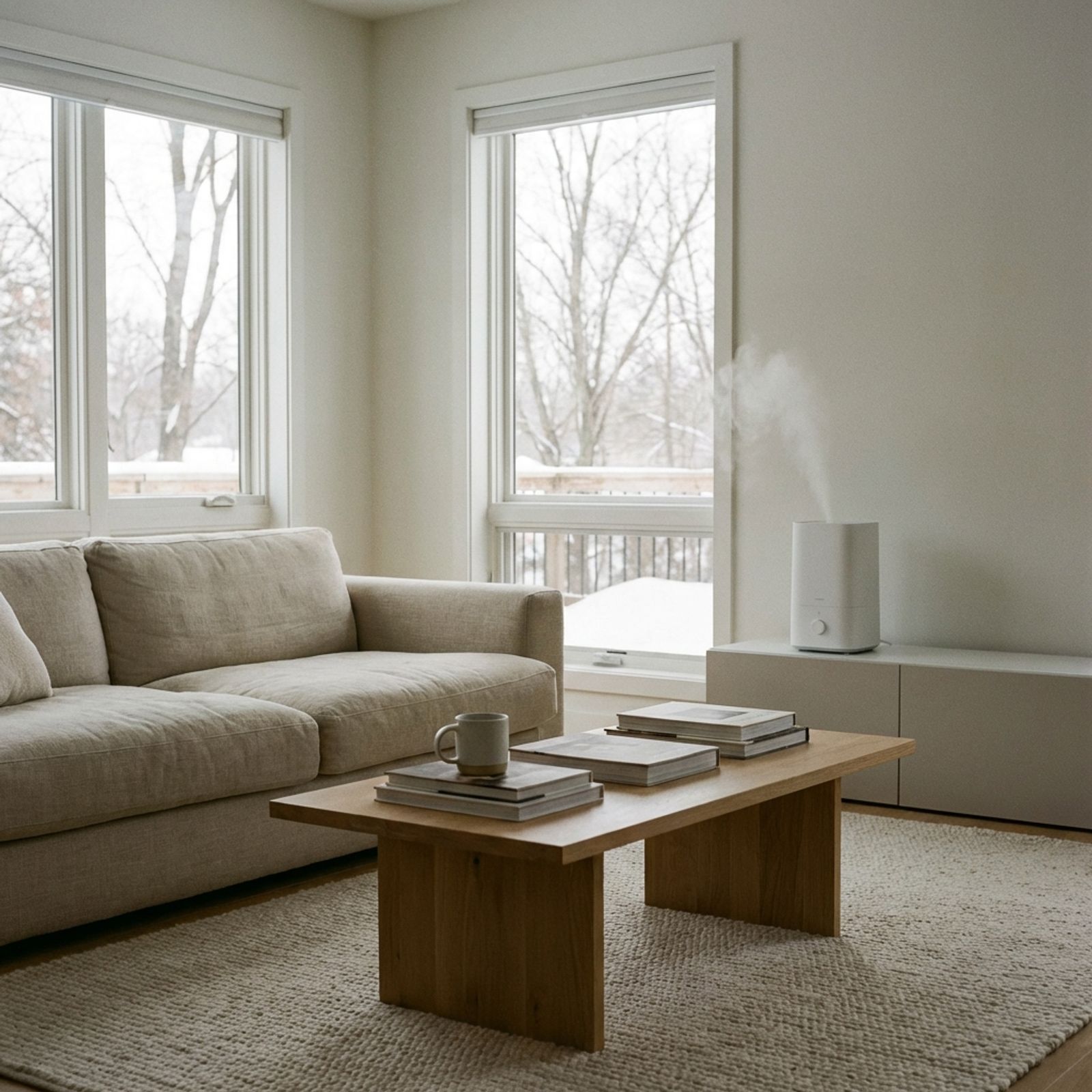
As temperatures drop and windows close, air quality affects illness spread indoors more than any other time of year. Trapped air concentrates viral particles, while low humidity generally dries out mucous membranes, making you more susceptible to infection.
Understanding this connection is the first step to creating a healthier home environment during the cold season.
What This Means for Your Home
Winter seals our homes tight, which is great for energy bills but tough on health. Without fresh outdoor air exchange, viruses from a cough or sneeze linger in the air for hours.
We spend significantly more time indoors during these months, increasing our cumulative exposure to these concentrated airborne contaminants.
This creates the perfect storm for household transmission, where one sick family member easily infects the rest.
What Science Tells Us
Research indicates that lower indoor humidity levels help airborne viruses survive longer and travel further. When the relative humidity drops below 40%, viral particles remain lighter and stay afloat.
Conversely, optimal humidity helps weigh these particles down, effectively removing them from the breathing zone much faster.
Common Misunderstandings
- Myth: Cold air causes the flu. Reality: Viruses cause the flu; cold air just forces us indoors closer together.
- Myth: Your furnace filter kills viruses. Reality: Standard filters catch dust but let tiny viral particles pass through.
- Myth: All humidifiers are healthy. Reality: Dirty humidifiers can actually release mold and bacteria, worsening air quality.
- Myth: Indoor air is cleaner. Reality: Indoor air can be 2-5x more polluted than outdoor air.
Practical Takeaways
- Keep indoor humidity between 40% and 60% using a clean humidifier.
- Upgrade your HVAC filter to a MERV-13 rating if your system can handle it.
- Run a HEPA air purifier in high-traffic common areas like the living room.
- Crack a window for 10 minutes a day to introduce fresh air and dilute pollutants.
Bottom Line
Managing your indoor air is a powerful tool in your winter wellness toolkit. With simple adjustments to humidity and filtration, you can significantly reduce the potential for illness to spread at home.
Frequently Asked Questions
Does dry air make me sick?
Indirectly, yes. Dry air dries out your nasal passages, reducing your body's natural mucous defense against viruses.
What humidity level is best for winter?
Aim for 40-60%. This range minimizes viral survival while preventing mold growth that can occur at higher levels.
Do air purifiers stop the flu?
They can capture airborne virus particles, reducing the viral load in the room, but they don't eliminate transmission risk entirely.
Can I just open a window?
Yes, even short bursts of fresh air are excellent for diluting indoor pollutants and viral concentrations.
Want to improve your home's air quality?
Take our comprehensive air quality quiz to get personalized recommendations.
Take the Quiz