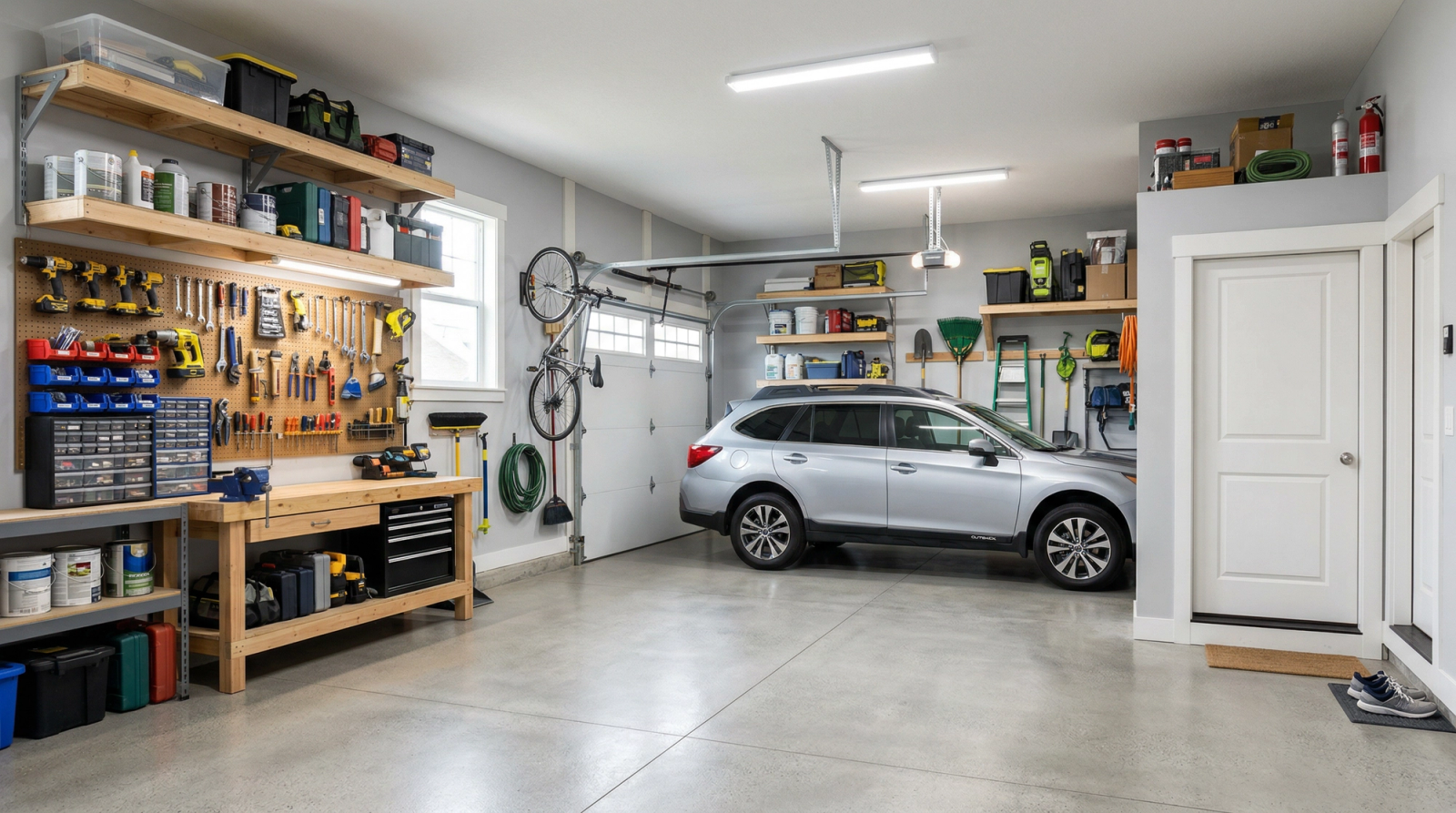
Attached garages create a direct pathway for pollutants to enter your home. Every time you start your car, store chemicals, or use power tools, you introduce combustion gases, VOCs, and particulates into garage air quality. Without proper management, these pollutants migrate through shared walls, doors, and air circulation systems into your living spaces.
Unlike detached garages, attached garages share structural barriers with your home. Carbon monoxide from car exhaust, gasoline vapors from stored fuel, and fumes from paints, solvents, and lawn equipment accumulate in the enclosed space. The stack effect and pressure differences pull this contaminated air into bedrooms, kitchens, and living rooms.
This guide explains the unique air quality challenges attached garages present and provides evidence-based strategies to protect your home from garage-originated pollution.
What Attached Garage Air Quality Means for Your Home
Most homeowners underestimate how much garage pollution affects indoor air. Studies measuring air quality in homes with attached garages find elevated levels of benzene, carbon monoxide, and particulate matter in living spaces—pollutants that originate from garage activities.
Car exhaust contains carbon monoxide, nitrogen dioxide, and benzene. Even brief warm-ups or pulling into the garage with a running engine introduce significant amounts into the space. Chemical storage—gasoline, pesticides, cleaners—continuously off-gasses VOCs. These pollutants do not stay contained.
The shared wall or door between your garage and home is rarely airtight. Air pressure differences, especially when HVAC systems run, pull garage air indoors. For families with young children or members with respiratory conditions, this exposure is concerning.
What Science Says About Garage Air Quality
Research on attached garages consistently shows measurable air quality impacts on adjacent living spaces. Studies using real-time CO monitors demonstrate that starting a car in an attached garage raises whole-home carbon monoxide levels, even with the garage door open.
VOC measurements find that homes with attached garages have higher baseline benzene and toluene concentrations than homes with detached garages or no garages. Chemical storage and vehicle-related activities are the primary sources.
Ventilation studies show that passive air leakage between garages and homes is common. Even modern, well-sealed homes show air exchange between these spaces. Mechanical ventilation in garages reduces pollutant transfer significantly.
Common Myths About Garage Air Quality
Several misconceptions prevent homeowners from effectively managing attached garage air quality:
- Myth: Opening the garage door while starting the car is enough. Reality: Garage doors open slowly. Significant CO and exhaust enters before the door fully opens. Always start cars outside if possible.
- Myth: The door to the house keeps garage air out. Reality: Doors are not airtight. Pressure differences pull air through gaps. Weather stripping helps but does not eliminate transfer.
- Myth: Chemical fumes are only a problem when using them. Reality: Stored chemicals continuously off-gas. Open containers, even partially sealed, release VOCs steadily.
- Myth: Modern cars produce minimal exhaust. Reality: While cleaner than older vehicles, modern cars still emit CO, NOx, and particulates. Brief garage operation is still problematic.
Practical Steps to Improve Attached Garage Air Quality
Focus on these evidence-based strategies for attached garage air quality:
- Never run vehicles in the garage: Start cars outside, not in the garage. Do not warm up vehicles in enclosed spaces, even with the door open.
- Install exhaust ventilation: Add a continuously running exhaust fan or one that activates when the garage door opens. This removes pollutants before they migrate indoors.
- Seal the common wall and door: Use weather stripping on the door to the house. Seal penetrations like electrical outlets and HVAC ducts in the shared wall.
- Store chemicals properly: Keep gasoline, paints, solvents, and cleaners in sealed containers. Use outdoor sheds for long-term chemical storage when possible.
- Avoid HVAC connections: Never connect garage spaces to your home HVAC system. Garages should have separate ventilation or none at all.
- Install CO detectors: Place carbon monoxide detectors in rooms adjacent to the garage and in sleeping areas. Test monthly and replace batteries annually.
- Minimize idling: Pull in and shut off immediately. Avoid sitting in the car with it running while parked in the garage.
When Garage Air Quality Efforts Are Not Enough
Sometimes standard garage air quality improvements fall short:
- Persistent chemical odors in the home despite sealed storage indicate inadequate sealing between garage and living space. Professional air sealing may be necessary.
- CO detector alarms suggest vehicle emission infiltration or unsafe practices. Review vehicle operation procedures and consider professional CO testing.
- Indoor air quality testing showing elevated benzene or toluene often traces to garage sources. Identify and remove or better contain the source.
If basic interventions do not resolve garage-related indoor air quality problems, consult professionals specializing in air sealing, HVAC design, or indoor air quality assessment.
Attached Garage Air Quality Improvement Checklist
Use this checklist to systematically improve garage air quality:
- Install exhaust ventilation activated by garage door opening
- Weather-strip door between garage and house
- Seal all penetrations in shared wall (electrical, plumbing, HVAC)
- Never start or warm up vehicles inside garage
- Store gasoline, paints, and chemicals in sealed containers
- Relocate long-term chemical storage to outdoor shed when possible
- Install CO detectors in rooms adjacent to garage
- Test CO detectors monthly, replace batteries annually
- Keep garage door open while working with chemicals or power tools
- Avoid using garage as workshop without adequate ventilation
- Clean oil spills and leaks promptly to reduce VOC emissions
Key Takeaways
- Attached garages are significant sources of indoor air pollution, introducing car exhaust, chemical fumes, and VOCs into living spaces through shared walls and doors.
- Never running vehicles inside the garage and installing exhaust ventilation are the two most effective interventions for garage air quality.
- Proper chemical storage in sealed containers and air sealing between garage and home prevent most garage-originated pollution transfer.
- Carbon monoxide detectors in rooms adjacent to the garage provide critical safety protection against vehicle emission infiltration.
Frequently Asked Questions
Is it safe to start my car in an attached garage with the door open?
No. Garage doors open slowly, allowing significant CO and exhaust to enter before fully opening. Always start vehicles outside the garage. Even brief warm-ups inside introduce harmful pollutants into your home.
Do I need ventilation in my attached garage?
Yes. Exhaust ventilation removes pollutants before they migrate into living spaces. Install a fan that runs continuously or activates when the garage door opens. This significantly reduces garage pollution transfer.
Can I store gasoline in my attached garage safely?
Only in approved, sealed containers designed for gasoline storage. Even sealed containers off-gas some vapors. Minimize stored quantities and use outdoor sheds when possible. Never store gasoline in open or improper containers.
Will sealing the door to my house keep garage air out?
Partially. Weather stripping helps significantly but does not eliminate all air transfer. Pressure differences still pull some garage air through gaps. Combine door sealing with exhaust ventilation and source control for best results.
Should I connect my garage to my home HVAC system?
Never. Garages should not share HVAC systems with living spaces. This would circulate garage pollutants throughout your home. Garages should have separate ventilation or exhaust-only systems, not supply air from home HVAC.
Want to improve your home's air quality?
Take our comprehensive air quality quiz to get personalized recommendations.
Take the Quiz